Author: Kyle Hilliard

  • Tomb Raider: Legacy of Atlantis Gets February 2027 Release Date for PS5, Xbox, Switch 2, and PC

    Tomb Raider: Legacy of Atlantis Gets February 2027 Release Date for PS5, Xbox, Switch 2, and PC

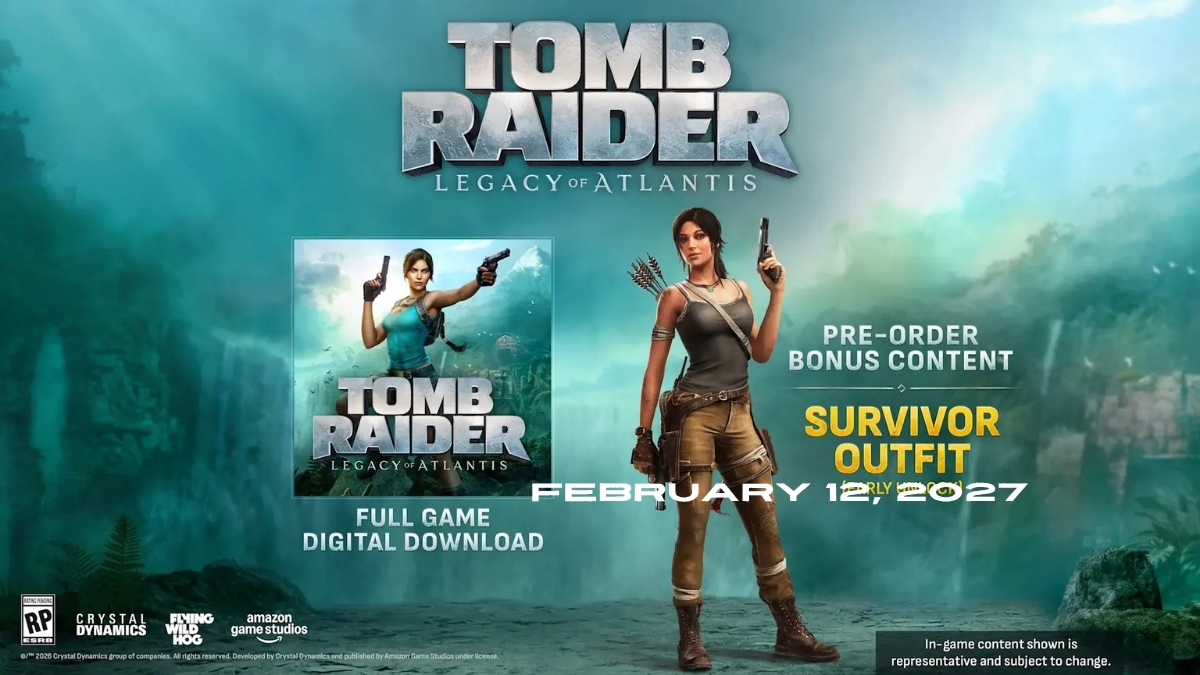
    Amazon Game Studios has confirmed that Tomb Raider: Legacy of Atlantis launches February 12, 2027 on PS5, Xbox Series X|S, Steam, and Nintendo Switch 2. The release date was confirmed in the June 2, 2026 preorder announcement and the State of Play trailer that showed new gameplay. The game was originally announced at The Game Awards on December 11, 2025 with a 2026 release window, making February 2027 an effective delay from the original target. Preorders are now live on PS5, Xbox Series X|S, and Steam. Switch 2 preorders will be available later.

    Tomb Raider: Legacy of Atlantis Launches February 12, 2027

    Detail Confirmed Info
    Release date February 12, 2027
    Regional note February 13, 2027 in Japan, Asia, Australia, and New Zealand, per PlayStation Blog
    Platforms PS5, Xbox Series X|S, PC via Steam, Nintendo Switch 2
    Developer Crystal Dynamics and Flying Wild Hog
    Publisher Amazon Game Studios
    Engine Unreal Engine 5
    Game type Full reimagining of the original 1996 Tomb Raider
    ESRB rating Teen: Blood and Violence

    tomb raider: legacy of atlantis february 2027

    February 12, 2027 is the confirmed global release date. Any older sources referencing a 2026 arrival are stale. The June 2, 2026 preorder announcement is the authoritative source.

    PS5, Xbox Series X|S, Steam, and Nintendo Switch 2 Confirmed

    Legacy of Atlantis is confirmed across four platforms at launch:

    PS5: includes PS5 Pro Enhanced support, DualSense haptic vibration and adaptive trigger support, and offline single-player.

    Xbox Series X|S: optimized for Xbox Series X|S, confirmed by the Xbox store listing and published by Amazon Game Studios.

    PC via Steam: Standard and Deluxe editions available, with Deluxe early access beginning two days before the full release date.

    Nintendo Switch 2: officially confirmed for day-one release alongside the other platforms. Switch 2 preorders are not yet live and will be available at a later date.

    Preorders Are Live, But Switch 2 Preorders Are Coming Later

    Preorders are currently open on PS5, Xbox Series X|S, and Steam. Switch 2 preorders have not yet launched; the official preorder page confirms they will be available later.

    All digital preorders include the Survivor Outfit as a preorder bonus. This applies to both Standard and Deluxe Edition preorders on all available platforms.

    Standard, Deluxe, and Collector’s Editions Explained

    Tomb Raider Legacy of Atlantis Standard Edition

    Standard Edition ($59.99)

    • Full game digital download
    • Preorder bonus: Survivor Outfit

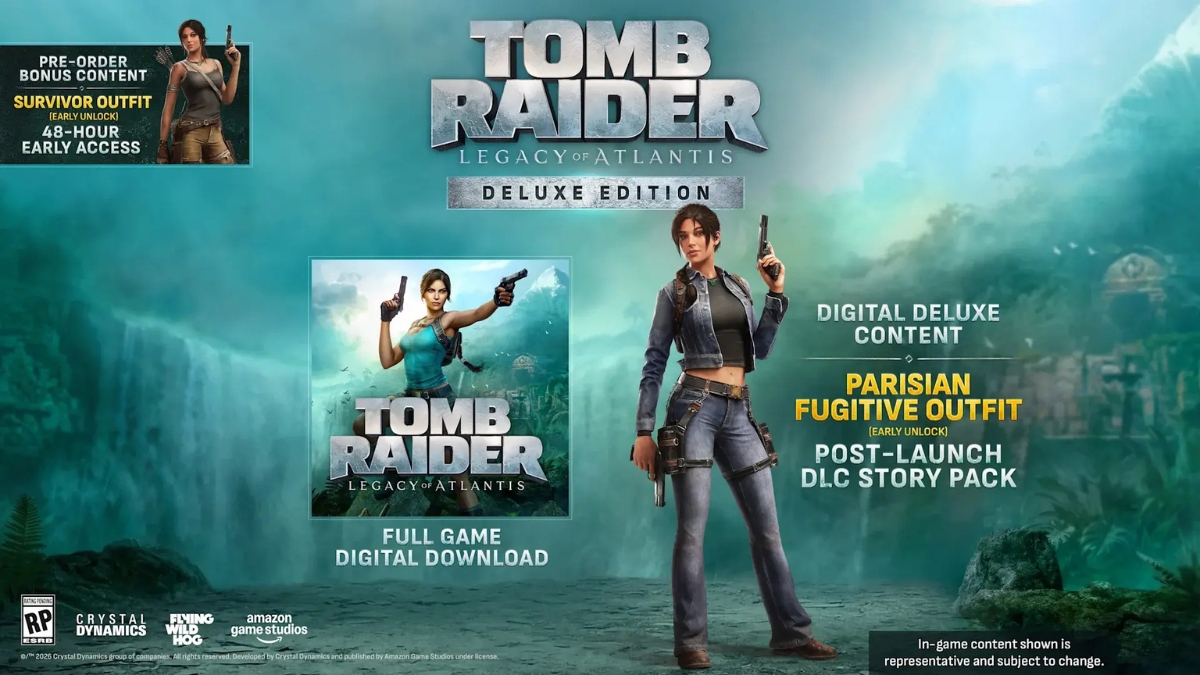
    Deluxe Edition ($69.99)

    Tomb Raider Legacy of Atlantis Deluxe Edition

    • Everything in Standard
    • 48-Hour Early Launch Access: play two days before the February 12 global launch
    • Parisian Fugitive Outfit
    • Post-Launch DLC Story Pack

    Collector’s Edition (Price not confirmed)

    • Everything in Deluxe
    • Premium Steel Case
    • Lara Croft vs. The T-Rex Statue
    • Mini Art Book
    • Croft Signet Pin
    • Triumvirate Talisman Keychain

    The Collector’s Edition is confirmed and will be available through select physical retailers. Availability details are still being announced.

    Pricing is confirmed for US digital stores via PlayStation Store, Xbox, and Steam. Regional pricing may vary.

    A Full Reimagining of Lara Croft’s 1996 Debut

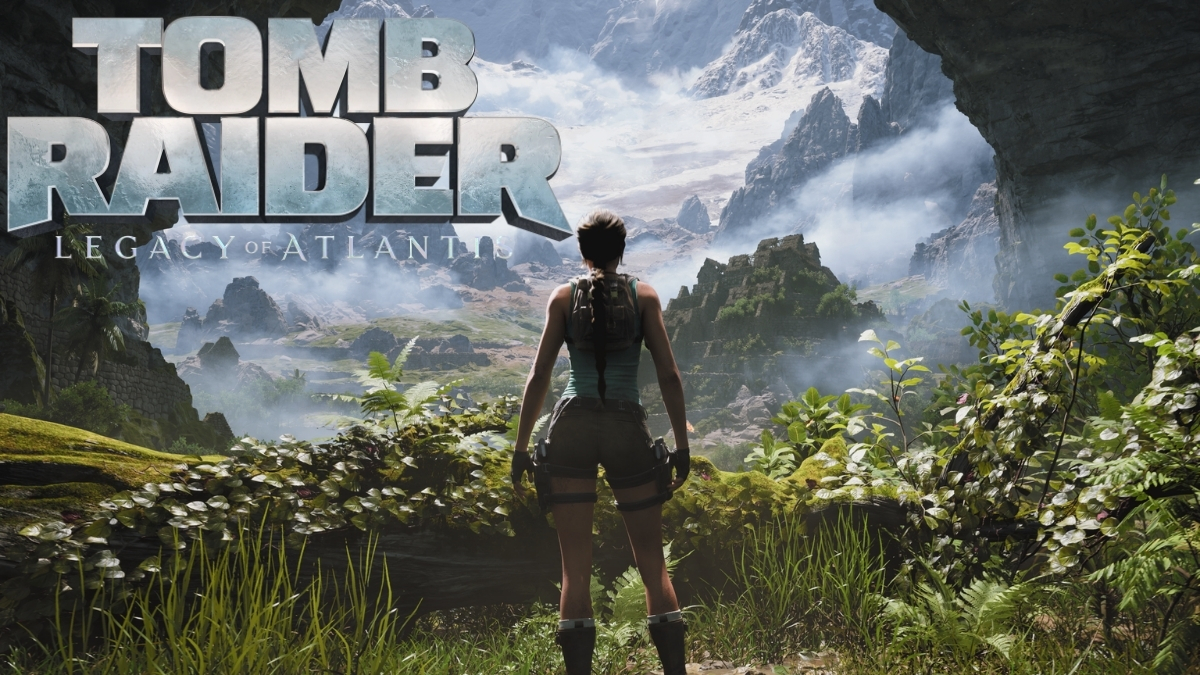
    Legacy of Atlantis is not a sequel. It is a modern reimagining of the original 1996 Tomb Raider, Lara Croft’s debut game, rebuilt from the ground up by Crystal Dynamics and Flying Wild Hog using Unreal Engine 5. The story follows Lara as she searches for the scattered pieces of the Scion across multiple locations: Peru, Greece, Egypt, and a mysterious Mediterranean island.

    The core Tomb Raider formula is intact: exploration, platforming, puzzle-solving, combat, and artifact hunting. Crystal Dynamics and Flying Wild Hog describe the project as a rebuild of the original adventure with expanded environments, redesigned puzzles, new surprises, and modern gameplay systems alongside Unreal Engine 5 visuals.

    Legacy of Atlantis is a separate project from Tomb Raider: Catalyst, a distinct title also announced for 2027. Catalyst is a new chapter in the series; Legacy of Atlantis is the reimagining of the original.

    Lost Valley, Rebuilt Puzzles, and Expanded Environments

    The official preorder announcement gives specific details about how the original game has been rebuilt:

    Lost Valley: Peru’s Lost Valley has been expanded with rebuilt puzzles and semi-connected environments, replacing the isolated room structure of the 1996 original.

    Classic puzzle reimagined: the cog puzzle from Peru has been redesigned as part of the broader puzzle overhaul.

    Movement and traversal: Lara uses strength, agility, and a grappling hook to climb, leap, and swing through environments. The grappling hook is a new addition not present in the 1996 original.

    Puzzle types: water flow, light beams, pressure plates, and symbol-based puzzles are confirmed across the game’s locations.

    Enemies: wildlife, mercenaries, and mythological creatures are all confirmed as enemy types.

    PS5 hardware features: DualSense haptic feedback and adaptive trigger support are confirmed for the PS5 version, adding physical feedback to traversal and combat.

    What Has Not Been Confirmed Yet

    • Switch 2 preorder opening date
    • Collector’s Edition pricing and full retailer list
    • Full gameplay details for Greece, Egypt, and the Mediterranean island locations
    • Multiplayer or co-op features: no announcement made
    • Post-Launch DLC Story Pack content beyond its inclusion in the Deluxe Edition
  • Tomb Raider: Legacy of Atlantis Still Listed for 2026 as Boss-Fight Design Details Surface

    Tomb Raider: Legacy of Atlantis Still Listed for 2026 as Boss-Fight Design Details Surface

    Tomb Raider Legacy of Atlantis remains officially listed for a 2026 release, and the newest credible update comes not from a trailer or a release date announcement, but from a Flying Wild Hog boss-fight designer discussing how the game’s encounter design is being built around clarity and fairness. Trailer 2 speculation is circulating ahead of June showcases, but nothing has been officially confirmed. As of May 31, 2026, the official release window still holds, and no 2027 delay has been announced.

    What Is Confirmed About Tomb Raider: Legacy of Atlantis

    Tomb Raider Legacy of Atlantis

    Legacy of Atlantis is a reimagining of Lara Croft’s original 1996 debut adventure, developed jointly by Crystal Dynamics and Flying Wild Hog, and published by Amazon Game Studios. The game is built in Unreal Engine 5 and is coming to PlayStation 5, Xbox Series X|S, and PC via Steam.

    Alix Wilton Regan voices Lara Croft. The story follows Lara as she searches for pieces of an artifact called the Scion, taking her through confirmed locations including Peru, Greece, Egypt, and a mysterious Mediterranean island. The game is described as a reimagining rather than a straight remake — honoring the structure and spirit of the original while bringing modern gameplay, visuals, and storytelling to the experience.

    The Steam page is live for wishlisting. It lists Crystal Dynamics and Flying Wild Hog as developers, Amazon Game Studios as publisher, and still shows the release date as Coming soon, with PC system requirements listed as TBD.

    Latest Update Points to Modernized Boss Fights

    The most substantive new development as of this week is a report from GamesRadar, published around May 28, 2026, covering comments made by Marcin Matuszczyk of Flying Wild Hog at the Digital Dragons conference in Kraków.

    Matuszczyk, who is working on boss fights for Legacy of Atlantis, spoke about what makes boss encounters feel fair versus frustrating. The core of his argument is that players should understand why they died — encounters need clear visual and audio cues so that failure feels instructive rather than arbitrary. He referenced Elden Ring’s Malenia as an example of a boss whose attacks are readable and well-telegraphed, even when she is extremely difficult.

    This does not mean Legacy of Atlantis is becoming a Soulslike game. Matuszczyk’s point was about design philosophy — that boss fights should communicate clearly, not punish players through confusion. Applied to Legacy of Atlantis, the implication is that the original game’s boss encounters, which were products of 1996 design conventions, are being rebuilt with fairer pacing, stronger visual feedback, and more readable attack patterns.

    It is one of the clearest recent looks at the remake’s boss-fight philosophy, and it carries weight because it comes from a developer directly involved with those encounters.

    Trailer 2 Is Still Not Official

    Speculation about a second trailer has grown because Tomb Raider: Legacy of Atlantis appeared in Summer Game Fest promotional footage. However, according to GamingBible, the footage used in that teaser was pulled from the existing Game Awards reveal trailer — it was not new material. No second trailer has been officially announced by Crystal Dynamics, Flying Wild Hog, or Amazon Game Studios.

    There is additional context worth noting: Alix Wilton Regan, who voices Lara in Legacy of Atlantis, is co-hosting the Future Games Show Summer Showcase on June 6, 2026, alongside Troy Baker. The show has announced world premieres and exclusive trailers. However, Tomb Raider: Legacy of Atlantis is not listed as a confirmed featured title for that event.

    Her hosting role creates reasonable speculation, but it does not constitute confirmation. A new trailer may appear in June. It has not been announced.

    Release Date Is Still Unannounced

    Tomb Raider: Legacy of Atlantis does not have a confirmed release date. What exists is a consistent official release window.

    The official Tomb Raider anniversary page states Legacy of Atlantis is slated to launch on PS5, Xbox Series X|S, and PC later this year. The official product page continues to list the game for 2026. The most recent business-side confirmation came from Embracer Group’s Q4 and full-year FY 2025/26 report, published May 20, 2026, which listed Legacy of Atlantis among titles expected in the second half of the year.

    That is the current state of the release window: second half of 2026, no exact date.

    What Should Not Be Treated as Confirmed

    Several claims are circulating that are not supported by official sources as of May 31, 2026.

    A delay to 2027 is a rumor. No official announcement of a delay has been made by Crystal Dynamics, Flying Wild Hog, Amazon Game Studios, or Embracer Group. Embracer Group’s Q4/FY 2025/26 report, published May 20, 2026, still places the game in the current fiscal year.

    Trailer 2 has not been announced. Summer Game Fest promotional footage reused existing material from the reveal trailer, which does not constitute a new trailer announcement.

    A Game Pass launch has not been confirmed. Amazon Game Studios is the publisher, not Xbox Game Studios, and no Game Pass announcement has been made.

    A PlayStation Plus launch has not been confirmed.

    A Nintendo Switch 2 version has not been confirmed. Announced platforms are PS5, Xbox Series X|S, and Steam only.

    PC system requirements remain listed as TBD on Steam.

    A price has not been announced.

    The Current Picture

    As of today, Tomb Raider: Legacy of Atlantis is a confirmed 2026 release with no exact date, a development team actively working on modernizing the game’s encounter design, and a trailer rumor cycle that has not yet been backed by any official announcement.

    The most useful thing the June showcase season could deliver is either a release date or a second trailer. Neither has been promised. Until something is officially announced, the Embracer report and the Digital Dragons boss-fight comments are the most current and credible information available.

    The delay was subsequently reported before Crystal Dynamics confirmed it — read our delay rumor coverage here.Bandai Namco later officially confirmed February 12, 2027 as the release date alongside preorder details — see the full release date breakdown. A new State of Play trailer was also shown on June 2, 2026 — watch what the trailer revealed.

  • Pragmata Stuttering and Freezing Fixes

    Pragmata Stuttering and Freezing Fixes

    Pragmata is freezing. The screen stutters. Your frame rate drops out of nowhere. You crash to desktop with an error you have never seen before. Sound familiar?

    You are not alone. A lot of PC players are hitting the same problems. The good news is there are real steps you can take right now. This guide walks you through all of them — starting with what Capcom officially recommends, then moving on to fixes that players have found on their own.

    One thing to be upfront about: Capcom has not released a patch that fully fixes all stuttering and freezing on PC. So nothing here is a guaranteed cure. Most of the official steps are safe to try, but advanced workarounds like registry edits or config file changes should be used carefully — this guide flags those clearly as you go.

    If the game is freezing during boss fights specifically, check out our Pragmata Boss Guide — it covers every fight in detail. And once the game is running smoothly, our Pragmata Best Loadout Guide will help you set up the best build for your playstyle.

    Why Is Pragmata Stuttering and Freezing on PC?

    Before jumping into fixes, it helps to know what is actually going wrong. You do not need to be a tech expert — here is the short version.

    Pragmata runs on Capcom’s RE Engine, the same engine used in Monster Hunter Wilds and Resident Evil 4 Remake. On PC, the game has to run across many different hardware and driver setups, which makes troubleshooting more complicated than on other platforms.

    There are three main reasons the game struggles on PC:

    Some repeated hitches may be related to shader cache problems. This is why Capcom recommends deleting the game’s shader cache files for graphical issues and instability. Clearing and rebuilding those files is one of the most common fixes players report helping with stuttering and short freezes.

    High graphics settings can increase the load on your graphics card. Turning down texture quality, ray tracing, or path tracing is a sensible troubleshooting step — especially if the game gets worse after running for a while.

    Pragmata uses DirectX 12. This is confirmed on the Steam store page as a requirement. Because of this, driver instability, GPU overclocks, or GPU timeouts can show up as Fatal D3D or DXGI errors instead of the game recovering quietly. Keeping your drivers up to date and your system stable is the main defence against these.

    These areas explain why the fixes below focus on drivers, shader cache files, graphics settings, overlays, and system stability. Start with the official steps and work through the rest from there.

    What Kind of Problem Are You Having?

    Not all performance problems in Pragmata are the same. Finding the right fix is faster if you know what you are looking for.

    The game lurches or skips every few seconds. This is stuttering. It can be related to shader cache problems or background software getting in the way. Start with the shader cache fix (Fix 3) and the background apps fix (Fix 6).

    The game freezes completely for a second or two, over and over. This is often connected to the game building graphics on the fly. It is most common on your first playthrough. Deleting the shader cache files (Fix 3) is the first thing to try.

    The game runs fine at first, then gets worse the longer you play. This may point to graphics load, VRAM pressure, heat, or driver behaviour building up over time. Lowering your graphics settings (Fix 7) and restarting the game periodically are the main workarounds right now.

    Your frame rate suddenly drops, then comes back. Usually caused by your graphics card getting too hot, graphics settings being too high, or another program competing for resources. Check your temperatures and try lowering settings.

    The game closes suddenly with a “Fatal D3D Error.” This is a crash caused by your graphics card losing connection with the game. It sounds intimidating, but there are several troubleshooting steps worth trying. Fix 5 covers this in detail.

    Has Capcom Fixed Pragmata Stuttering and Freezing?
    Has Capcom Fixed Pragmata Stuttering and Freezing?

    Not yet. At the time of writing, Capcom’s update page only lists one patch for Pragmata — a PS5 Pro update from April 21, 2026. There is no PC performance patch confirmed yet.

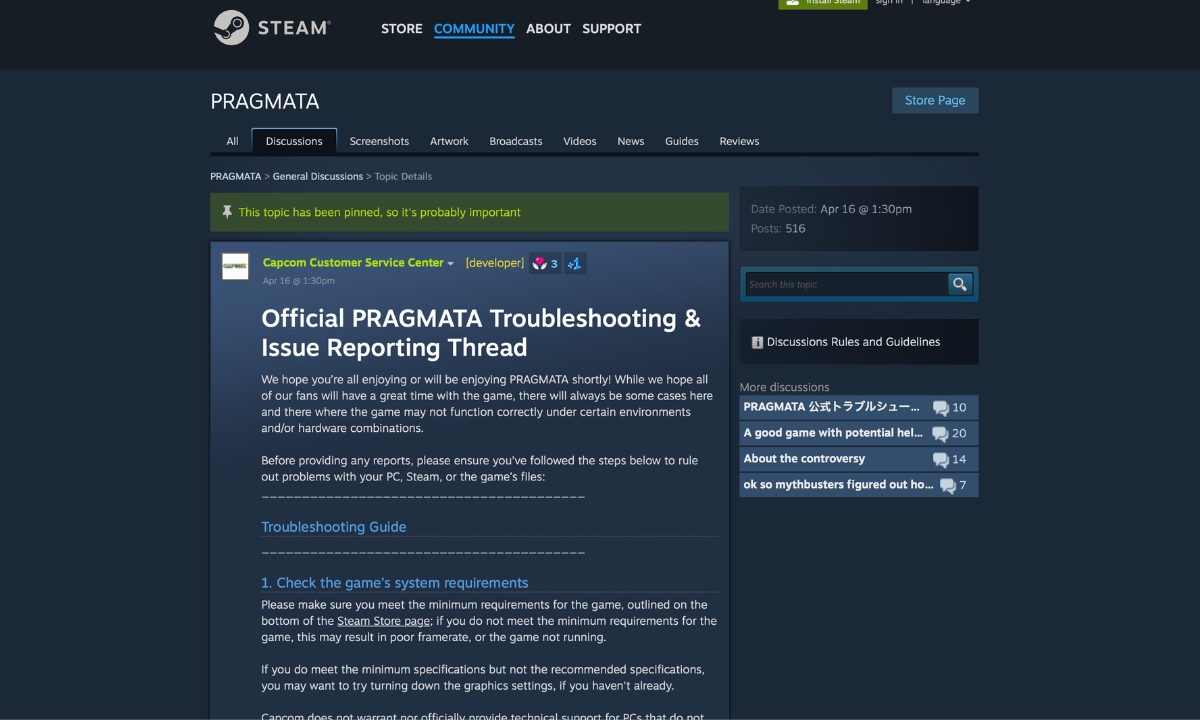
    What Capcom does have is an official troubleshooting thread on Steam where their support team lists steps players can take to help the game run better. That thread is the foundation for many of the fixes in this guide.

    Intel also released a driver update that fixed a specific crash for players with Intel graphics cards. More on that in Fix 9.

    Players on Steam and Reddit are still reporting problems. So treat everything below as steps to try, not guaranteed fixes. Game Empress will update this guide when Capcom releases a proper patch.

    Fix 1: Update Your Graphics Drivers and Windows

    This is the first thing Capcom tells players to do — and it really does matter. Old graphics drivers are one of the most common reasons Pragmata stutters or crashes on PC.

    Think of a graphics driver like the translator between Pragmata and your graphics card. If the translator is out of date, things get lost in translation, and the game breaks.

    Here is what to do depending on your graphics card:

    NVIDIA users: Go to NVIDIA’s website and download the latest driver. While you are there — if you have something called NVIDIA Smooth Motion turned on, turn it off before launching Pragmata. Players have reported that Smooth Motion causes crashes when the game tries to use DLSS or Frame Generation. It is a quick setting to check and a low-risk thing to try.

    AMD users: Go to AMD’s website and grab the latest driver.

    Intel Arc users: There is a specific driver you need — version 32.0.101.8735, released April 21, 2026. Before this driver, Pragmata could crash while loading the game menu on some Intel graphics setups. Download it from Intel’s official site and see Fix 9 for more details.

    A cleaner way to update drivers. When you uninstall a graphics driver the normal way, it leaves bits and pieces behind that can cause problems with the new driver. A free tool called Display Driver Uninstaller (DDU) removes everything completely. Capcom’s own guide recommends a clean install if a normal update does not help. You can download DDU from Guru3D.

    Also run Windows Update and install anything that is waiting. Pragmata needs DirectX 12 to work, and old Windows versions can cause issues with it.

    Fix 2: Check Your Game Files on Steam
    Check Your Game Files on Steam

    Sometimes a file gets corrupted during download or after an update. One bad file can cause crashes, stuttering, and all sorts of strange behaviour — even if everything else on your PC is fine.

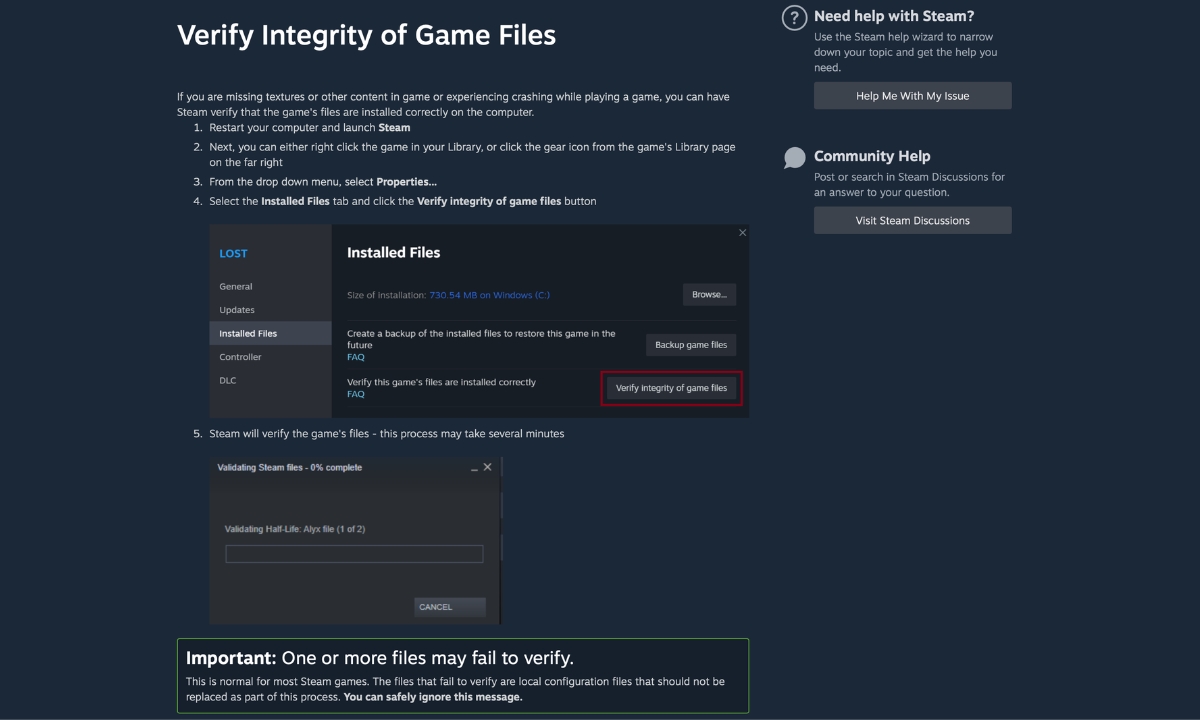
    Steam has a built-in tool that checks your game files and replaces anything broken. Capcom recommends this as one of the first steps to try.

    Here is how to do it:

    1. Open Steam and find PRAGMATA in your library.
    2. Right-click it and choose Properties.
    3. Click Installed Files.
    4. Click Verify integrity of game files.

    Steam compares your local files against Steam’s content server and redownloads anything that is missing or damaged. It takes a few minutes. This normally does not affect save data. Capcom’s guide notes that one or more files may fail to verify — this is normal for local configuration files and you can safely ignore that message. Let the process finish completely before relaunching the game.

    Fix 3: Delete the Shader Cache Files

    This is one of the most important fixes on this list, and it comes straight from Capcom’s official guide.

    Here is the idea: Pragmata creates special files that help it load graphics faster. Over time, these files can get damaged — especially if you changed your settings or had a crash mid-game. When that happens, the game slows down or behaves strangely because it is working from bad data.

    The fix is simple: delete the old files. The game will make fresh ones the next time you start it.

    Capcom specifically names these three files to delete:

    • shader.cache
    • shader.cache2
    • pipelinelist.bin

    You will find them inside the Pragmata game folder. The default location is:

    C:\Program Files (x86)\Steam\steamapps\common\PRAGMATA

    Just open that folder, find those three files, and delete them. The game should recreate them after launch. Players on Steam say that deleting shader.cache2 in particular made a noticeable difference in crash frequency and stuttering.

    Fix 4: The Game Freezes Every Few Seconds — Try This

    If Pragmata freezes briefly on a rhythm — about every 20 to 30 seconds — this is probably connected to the game preparing graphics as you play. It is most common on your first playthrough.

    According to community testing by GameGuidesBox, one tester tracked freezes every 25 seconds during a full first playthrough. After clearing the shader cache and letting the game rebuild it, the second playthrough had no freezes for four hours. Results will vary depending on your PC, but it is a good starting point.

    Here is the step-by-step fix:

    Step 1: Delete the three shader files from your Pragmata folder as described in Fix 3.

    Step 2: Clear the Steam shader cache too. Open Steam, go to Settings > Downloads, and click Clear Download Cache. Then open your Steam folder, go to steamapps > shadercache, find the folder named 3357650 (that is Pragmata’s ID), and delete it.

    Step 3: Launch Pragmata and wait on the main menu for a minute or two before starting the game. This gives it time to rebuild everything before you start playing.

    Step 4: If freezes are still happening after that, open Windows Disk Cleanup, select your C drive, tick DirectX Shader Cache, and click OK. This clears an extra cache your graphics driver uses, and it can help too.

    Why does this work? Multiple guides for games on the same engine describe a pattern where the game prepares graphics effects the first time they appear — pausing briefly each time it does. Once it has done the work once, those pauses stop. Capcom does not explain this directly in their guide, but their recommendation to delete shader files is consistent with it.

    Fix 5: Getting a Fatal D3D Error? Here Is What to Do

    The Fatal D3D error looks like this:

    Fatal D3D error (24, DXGI_ERROR_DEVICE_REMOVED, 0x887a0005)

    That looks intimidating but it basically means: your PC lost its connection to the graphics card and could not get it back. The game crashed instead of recovering.

    This is one crash type Pragmata players are reporting. Here is how to work through it:

    Turn off Path Tracing first. Path Tracing is a very demanding graphics setting that shows up in many of these crash reports. If you have it turned on, turn it off — either in the game settings or by editing the config file (see Fix 8). Some players found this alone stopped the crashes.

    Remove any GPU overclocking. If you have ever used software like MSI Afterburner to make your graphics card run faster, that can cause instability in Pragmata. Set everything back to default and test the game at normal speed before trying anything else.

    Do a clean driver reinstall using DDU. If the crash keeps happening even at default settings, there may be leftover data from old drivers causing the problem. Use DDU (see Fix 1) to wipe everything clean and install fresh drivers. Players who were stuck on this error said a DDU wipe fixed it when nothing else did.

    The TdrDelay registry fix — only if nothing else works. Some third-party guides suggest a Windows registry change that gives your graphics card more time to respond before Windows forces a crash. It is not something Capcom recommends, and it is a system-level change, so only try it as a last resort. If you want to try it:

    1. Press Win + R, type regedit, and press Enter.
    2. Go to HKEY_LOCAL_MACHINE\SYSTEM\CurrentControlSet\Control\GraphicsDrivers.
    3. Right-click in that folder and choose New > DWORD (32-bit) Value.
    4. Name it TdrDelay and set the value to 10.
    5. Restart your PC.

    If this causes any new problems, delete the TdrDelay entry to undo it.

    Crashed after changing Frame Generation to DLSS? Some players got stuck in a crash loop after switching that setting. The fix was deleting both the shader cache files and the config.ini file from the game folder, then letting both rebuild from scratch on the next launch.

    For a deeper look at all types of Pragmata crashes, see our Pragmata Fatal D3D Error and Crashing Fixes guide.

    Fix 6: Close Other Programs and Turn Off Overlays

    Pragmata does not always play well with other software running in the background. Capcom’s own guide calls this out — recording tools, performance overlays, and background apps can all get in the way and cause stuttering or crashes.

    Try turning these off one at a time and testing after each:

    • Steam overlay — turn it off in Steam > Settings > In-Game
    • Discord overlay
    • NVIDIA GeForce Experience overlay
    • NVIDIA Smooth Motion — found in NVIDIA App or driver settings. Players report this causes crashes with DLSS or Frame Generation
    • MSI Afterburner and RivaTuner
    • Xbox Game Bar
    • OBS, ShadowPlay, or any other recording tool
    • Browser tabs, cloud backup tools, anything updating in the background

    Also add Pragmata to your antivirus exceptions. This is something a lot of people miss. If your antivirus is scanning game files while Pragmata is loading them, it can cause hitches and mid-session crashes. Capcom specifically names these three things to exclude:

    • PRAGMATA.exe — found at C:\Program Files (x86)\Steam\steamapps\common\PRAGMATA
    • Steam.exe — found at C:\Program Files (x86)\Steam
    • Your Steam AppData folder — found at C:\Users\[your name]\AppData\Local\Steam

    Fix 7: Turn Down Your Graphics Settings

    If the game is still stuttering after the steps above, your graphics settings might simply be too high for your hardware. Capcom recommends lowering them, starting with the most demanding ones first.

    Go to Options > Graphics and switch to the Minimum preset. If the stuttering stops, you know graphics load is the issue. Then you can slowly raise individual settings until you find where the problem starts.

    Here is what to change and why:

    Ray Tracing — turn it off if your card is not powerful enough. The game requires at least an AMD Radeon RX 6700 XT with 12GB of memory, or an NVIDIA RTX 3060 with 12GB, to support ray tracing properly. If your card is below that, turning ray tracing off will help a lot.

    Path Tracing — turn this off first when troubleshooting. Path Tracing is even more demanding than ray tracing. It appears in a lot of crash reports, particularly the Fatal D3D error. Turning it off is a sensible first troubleshooting step when something goes wrong.

    Texture Quality — stick to Medium. If textures look blurry or the game feels sluggish, your graphics card may be running out of memory. Drop textures to Medium. One community tester reported that the Low preset actually made things worse — causing textures to fail loading and creating frame time spikes. Medium is the safe floor.

    Volumetric Lighting and Fog — lower these in demanding scenes. These settings affect how light moves through air and smoke effects. Lowering them can smooth out performance in busier parts of the game.

    Shadow Quality and Hair Quality — Medium is fine. These have a noticeable impact on performance with very little visible difference when set to Medium.

    Use the game’s upscaling option. In graphics settings, you can switch to a balanced upscaling mode. This makes the game run at a lower resolution internally and then sharpens the image — giving you better performance without making things look dramatically worse.

    Once everything is running smoothly, check out our Pragmata All Weapons Guide to see all 15 weapons in the game, and our Pragmata Best Loadout Guide to build the best setup.

    Fix 8: Crashes When Changing Path Tracing or Frame Generation?

    Some players find that Pragmata crashes the moment they try to turn Path Tracing or Frame Generation on or off in the settings menu. It crashes before the setting even changes.

    Wccftech reports that editing config.ini can bypass crashes caused when toggling Path Tracing or Frame Generation from the in-game menu. The workaround is to set these options before you launch the game instead of changing them inside it:

    1. Right-click PRAGMATA in Steam, choose Manage > Browse Local Files.
    2. Find the file called config.ini and open it with Notepad.
    3. Change your Path Tracing, Frame Generation, and upscaling settings directly in that file.
    4. Save and close the file, then launch the game.

    This way the game starts with the settings already set and never has to restart anything mid-session.

    Also — if you have any GPU overclock running, turn it off before changing graphics-heavy settings. The game is sensitive to that kind of instability.

    Fix 9: Intel Graphics Users — Install This Driver
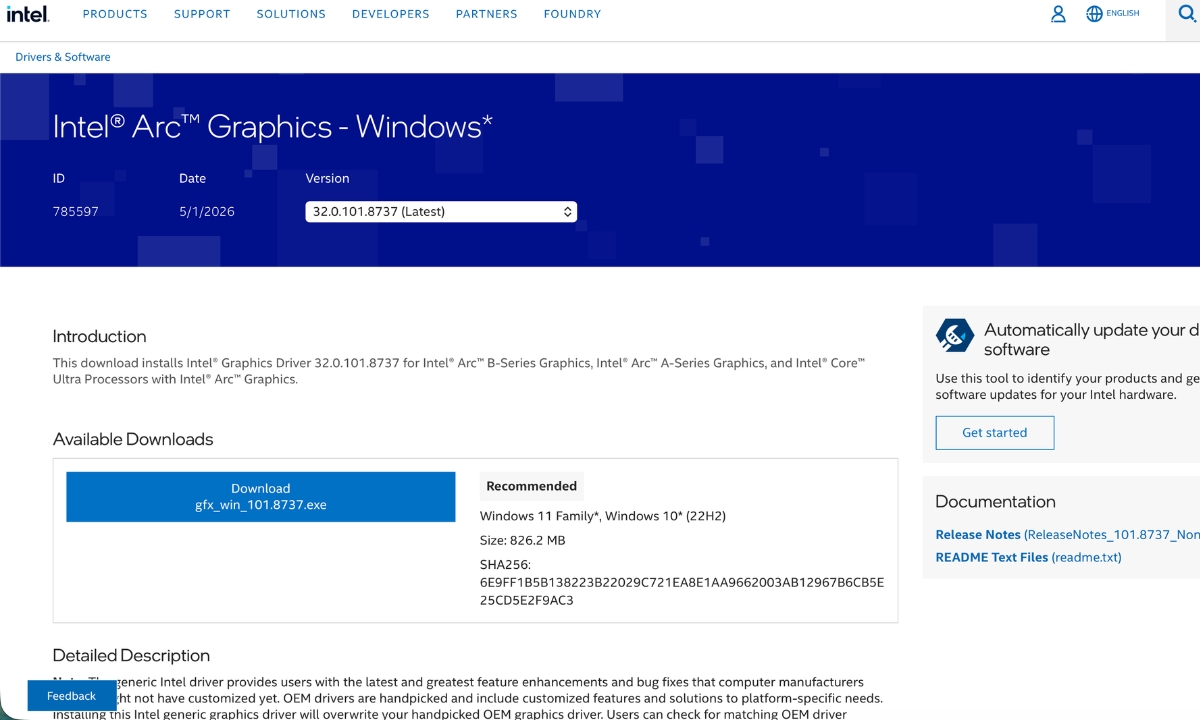
    Intel Arc graphics driver page for Pragmata crash fix

    If your PC has an Intel Arc graphics card or an Intel Core Ultra processor with built-in graphics, there is a specific driver update just for you.

    Intel released driver 32.0.101.8735 on April 21, 2026. Before this update, Pragmata could crash while loading the game menu on some Intel setups. This driver fixes that specific problem.

    It covers:

    • Intel Arc A-Series graphics cards
    • Intel Arc B-Series graphics cards
    • Intel Core Ultra Series 1, 2, and 3 with built-in Intel Arc graphics

    Download it from Intel’s official driver page.

    One important note: this fix only covers that specific menu crash. It does not fix general stuttering, freezing, or long-session slowdowns on Intel hardware. Do not expect it to solve everything.

    Fix 10: Check Your PC’s Temperature, Power Settings, and SSD

    These are easy to overlook but they matter. Capcom’s own guide mentions all of them.

    If your PC gets hot, the game will slow itself down. When your graphics card runs too hot, it automatically reduces its speed to cool down. This causes stuttering that gets worse the longer you play — and usually recovers after you restart the game. Use a free tool like HWMonitor to check your temperatures while playing. If they are running high, make sure your vents are clear and your fans are working.

    Set Windows to High Performance mode. If your PC is set to a power-saving mode, it may be limiting how fast your processor and graphics card run. Search for Power Plan in Windows and switch to High Performance or Balanced. This is especially important on laptops.

    Laptops: make sure Pragmata is using the right graphics card. Many laptops have two graphics cards — a weaker one built into the processor, and a stronger dedicated one. Pragmata should always use the dedicated one. Open your NVIDIA or AMD control panel and check that Pragmata is assigned to the dedicated card. Running it on the built-in graphics will cause serious performance problems.

    Install the game on an SSD. Capcom recommends an SSD in the system requirements. Pragmata loads a lot of data as you move through the game. If it is installed on an older hard drive, you may see loading pauses and texture delays. Moving it to an SSD is worth doing if you have the option.

    Quick Answers

    Has Capcom permanently fixed Pragmata stuttering and freezing? Not yet. As of the time of writing, there is no PC performance patch from Capcom. What exists are their official troubleshooting steps, one Intel driver fix, and workarounds players have shared.

    Why does the game freeze every few seconds? This is likely connected to the game preparing graphics effects as you play. Deleting the shader cache files — shader.cache, shader.cache2, and pipelinelist.bin — from the game folder and letting them rebuild has helped many players. It is most common on a first playthrough.

    What is the Fatal D3D error? It means your PC lost connection to the graphics card and could not get it back. Start by turning off Path Tracing and removing any GPU overclock. If it keeps happening, do a clean driver reinstall with DDU.

    Should I delete the shader cache files? Yes. Capcom’s guide specifically recommends it for graphical issues and instability. The files are safe to delete — the game rebuilds them automatically.

    Does NVIDIA Smooth Motion cause crashes in Pragmata? Players report that disabling it fixed crashes when using DLSS or Frame Generation. It is not an official Capcom statement, but it is easy to check and worth trying.

    What did the Intel driver fix? Driver 32.0.101.8735 fixed a crash that happened when loading the game menu on some Intel Arc and Core Ultra setups. It does not fix general stuttering or freezing.

    Where do I report a crash to Capcom? Go to Capcom’s pinned Steam thread. When Pragmata crashes, it saves a crash report file inside your game folder in a folder called CrashReport. Attach that zip file, along with your DxDiag.txt and config.ini, when you contact Capcom support.

    More Pragmata Guides


    Game Empress will update this guide when Capcom releases a patch for PC performance.
  • Subnautica 2 Reportedly Leaks Online Ahead of Early Access Launch

    Subnautica 2 Reportedly Leaks Online Ahead of Early Access Launch

    Subnautica 2 has reportedly leaked online. Ahead of its May 14 Early Access launch, reports claim files presented as a playable build, along with screenshots, are circulating on piracy sites. Unknown Worlds and Krafton have not publicly addressed the reported leak at the time of writing.

    The reports avoid treating the leaked build as officially confirmed. Kotaku and Neowin both framed the situation cautiously, and IGN also covered the story.

    What Is Actually Out There

    Kotaku reports that files for a build of Subnautica 2 are circulating online, alongside screenshots — with some images described by users as never-before-seen. Kotaku’s Lewis Parker was clear that the legitimacy of the leak could not be fully verified. Neowin similarly framed the situation carefully, reporting that game files are reportedly circulating among piracy groups ahead of the May 14 launch.

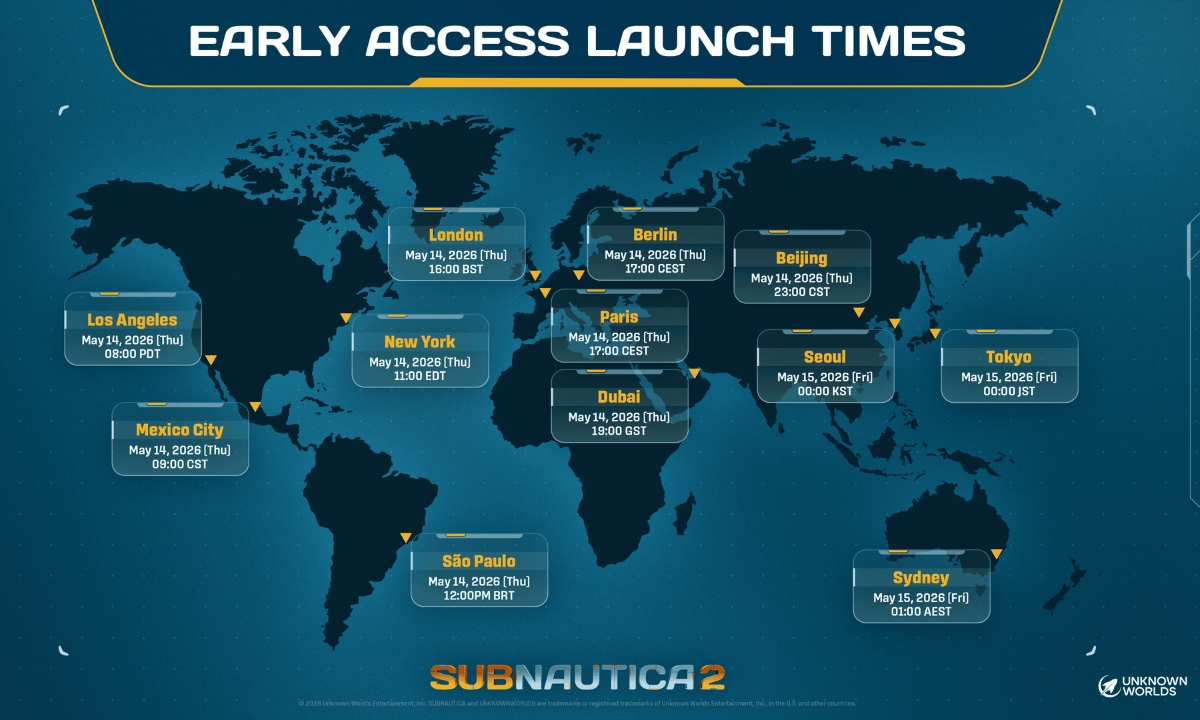
    Subnautica 2 Early Access global launch times

    Kotaku reported that signs appear to point toward the cracking group DenuvOwO, based on Discord activity showing that several users appeared to know about a leaked build before wider reporting picked up. However, the outlet also made clear that the source of the leak has not been confirmed. None of the reports identifies exactly how the build surfaced. Kotaku said the origin remains unknown, while Neowin framed the situation as another possible pre-launch leak following recent reports around Forza Horizon 6.

    Unknown Worlds opened pre-purchase and pre-load on Steam 72 hours before launch. That timing has drawn attention, but as Kotaku noted, Playground Games confirmed that Forza Horizon 6’s leak was not the result of a pre-load issue. There is currently no confirmation that Subnautica 2’s pre-load caused the reported leak.

    Why This Leak Is Especially Damaging

    Subnautica 2 reaching May 14 is not a straightforward story. It is the result of a months-long legal battle that would be dramatic even by gaming industry standards.

    In July 2025, publisher Krafton delayed the game from 2025 to 2026 and fired Unknown Worlds co-founders Charlie Cleveland and Max McGuire, along with CEO Ted Gill. Reports and litigation centered on a $250 million earnout tied to 2025 targets, with former leadership alleging the delay affected that payout. Krafton disputed the financial motive throughout the legal proceedings.

    A leaked internal document from the same period — confirmed as authentic by Krafton — showed the early access build had been assessed as lacking polish and market impact. That document became public evidence in the legal dispute.

    In March 2026, a Delaware court ruled against Krafton on the studio-control dispute, ordered Ted Gill reinstated as CEO, and extended the period in which the earnout criteria could be met. The broader earnout and damages questions were not fully resolved at that point. The May 14 Early Access date was announced not long after. Even that announcement became contentious — Gill accused Krafton of leaking the date in violation of Vice Chancellor Lori Will’s order.

    By April 2026, Subnautica 2 had removed Krafton as its named publisher from Steam and Epic storefronts. However, Unknown Worlds staff later said Krafton was still helping with launch support and described the situation as co-publishing.

    The game went into pre-load with over five million Steam wishlists behind it. For Subnautica 2 specifically, the timing is especially difficult: the reported leak comes days after the game cleared major legal obstacles that had delayed its Early Access launch.

    Part of a Bigger Pattern This Week: Forza Horizon 6 Leaked First

    Subnautica 2 is the third major game to reportedly leak in three days, and it follows a very similar pattern to what happened with Forza Horizon 6 earlier this week.

    Forza Horizon 6, set for general release on May 19, reportedly had unencrypted files — around 155GB — made accessible through Steam on May 10, nine days before launch. Reports claimed the files were not protected in the way a preload would normally be encrypted ahead of release, and the situation spread quickly across piracy communities. Playground Games issued a public statement confirming the leak was not a pre-load issue, and announced that the studio would apply franchise-wide and hardware bans to any players found accessing the leaked build.

    The reason the Forza comparison matters for Subnautica 2 is this: both games went into pre-load before their respective leaks surfaced, and in both cases that connection was publicly questioned. Playground Games ruled out the pre-load as the cause for Forza Horizon 6. There is currently no equivalent statement from Unknown Worlds on what caused the Subnautica 2 reports to surface.

    Directive 8020 from Supermassive Games also reportedly leaked ahead of its May 12 launch. Neowin framed all three incidents as part of the same wave. The pattern has renewed debate around PC DRM and pre-release access — and raises questions about how builds are reaching piracy groups before launch day.

    What You Should Do

    If you already pre-ordered, the pre-load is live and the game unlocks May 14. Nothing in the reports suggests legitimate pre-orders or launch access have changed.

    If you were on the fence, the $29.99 price and day-one availability through Game Pass Ultimate and PC Game Pass make the official version easy to access without resorting to risky unofficial files.

  • Yoshi and the Mysterious Book Is $10 Off at Walmart — Here Is the Deal Before It Goes

    Yoshi and the Mysterious Book Is $10 Off at Walmart — Here Is the Deal Before It Goes

    Deal trackers and cart checks currently show the Yoshi and the Mysterious Book Walmart pre-order at $59.88 before tax — which is $10.11 below the $69.99 physical MSRP and just under the $59.99 digital price on the Nintendo eShop. As of April 25, this was the lowest physical pre-order price we found in the US. The game launches on May 21, 2026 exclusively on Nintendo Switch 2, which means the window to lock in the Yoshi and the Mysterious Book Walmart price before launch day is short.

    Yoshi and the Mysterious Book Walmart Price — What You Are Actually Saving

    The Yoshi and the Mysterious Book Walmart listing sits at $59.88 before tax, verified via deal trackers and cart checks at the time of writing. Nintendo’s own eShop sells the digital version at $59.99, while the physical MSRP is set at $69.99 — making this the first Nintendo-published Switch 2 exclusive where the physical version carries a higher price tag than digital. Walmart’s listing effectively closes that gap, giving you a boxed physical copy for $10.11 less than the MSRP and just under the digital price. At every other major US retailer checked on April 25, Yoshi and the Mysterious Book was still listed at the full $69.99 physical price.

    Why Is Yoshi and the Mysterious Book Cheaper at Walmart?

    The Yoshi and the Mysterious Book Walmart discount is notable because this is the first game under Nintendo’s new pricing structure for Switch 2 exclusives, where Nintendo-published digital titles can carry a lower MSRP than their physical counterparts. Nintendo’s official explanation is that digital copies cost less to produce and distribute, and those savings are passed to the buyer. The physical version therefore carries a $10 premium by default.

    Yoshi and the Mysterious Book Walmart Deal

    Walmart’s move is to absorb that difference and match the lower digital price on the physical copy. It is an unusual move given that retailers already operate on tight margins on new game sales, but it keeps Walmart competitive against Nintendo’s own eShop for buyers who prefer physical copies. As of April 25, Amazon, Best Buy, and GameStop had not followed Walmart’s lead on this title and were all still listing the game at $69.99. If that changes before the May 21 launch, we will update this article.

    Is the Yoshi and the Mysterious Book Walmart Deal Still Live?

    The Yoshi and the Mysterious Book Walmart deal was confirmed live as of April 25, 2026. Walmart has not stated an end date on the listing, but pre-order pricing on new physical games at Walmart can change without notice. The May 21 release date makes this more time-sensitive than most deals — there are fewer than four weeks between now and launch, which limits how long the discounted price is likely to remain available. If you were already planning to buy a physical copy, checking the Yoshi and the Mysterious Book Walmart listing now before the price adjusts is worth doing. Your order at checkout should generally remain tied to the price shown, though Walmart’s standard retailer terms still apply.

    Yoshi and the Mysterious Book Walmart vs Digital — Which Should You Buy?

    At the Walmart prices checked for this article, physical and digital come to essentially the same cost. For the Yoshi and the Mysterious Book Walmart pre-order specifically, the decision is about format preference rather than price. The Walmart physical copy gives you a boxed version you can resell, lend, or keep on a shelf. The Nintendo eShop digital version gives you instant access on launch day without waiting for shipping, and the game is tied to your Nintendo Account for digital access. Neither has a clear price advantage at the Yoshi and the Mysterious Book Walmart price point.

    One practical note on shipping: Walmart showed free shipping on this listing at the time of writing, though shipping costs can vary by location and account. If you are close to the May 21 release date, ordering physical early enough to receive it on launch day is worth factoring in. Digital has no such concern.

    If Splatoon Raiders is also on your list, Walmart is running the same physical price match on that title too — we covered it in our Splatoon Raiders pre-order guide. Both deals appear to be part of the same response to Nintendo’s new pricing approach for Nintendo Switch 2 exclusives.

    Before you order, a few official details worth knowing: Nintendo lists the digital version at an estimated 20.6 GB download size, with TV, Tabletop, and Handheld play modes all supported. The official listing carries a Mild Fantasy Violence descriptor.

    Walmart Deal
    Yoshi and the Mysterious Book
    Nintendo Switch 2 exclusive · May 21, 2026
    Pricing
    Digital (eShop)
    $59.99
    Physical MSRP
    $69.99
    Walmart price
    $59.88 before tax — save $10.11
    Amazon / Best Buy / GameStop
    $69.99 (full MSRP as of April 25)
    Game details
    Developer / Publisher
    Nintendo
    Platform
    Nintendo Switch 2 exclusive
    Release date
    May 21, 2026
    Genre
    2D platformer
    Where to buy
    Physical at $59.88
    Walmart.com
    Digital at $59.99
    Nintendo eShop
    Deal status
    Live as of April 25, 2026 — no end date stated
  • Nintendo Announces Yoshi and the Mysterious Book For Switch 2

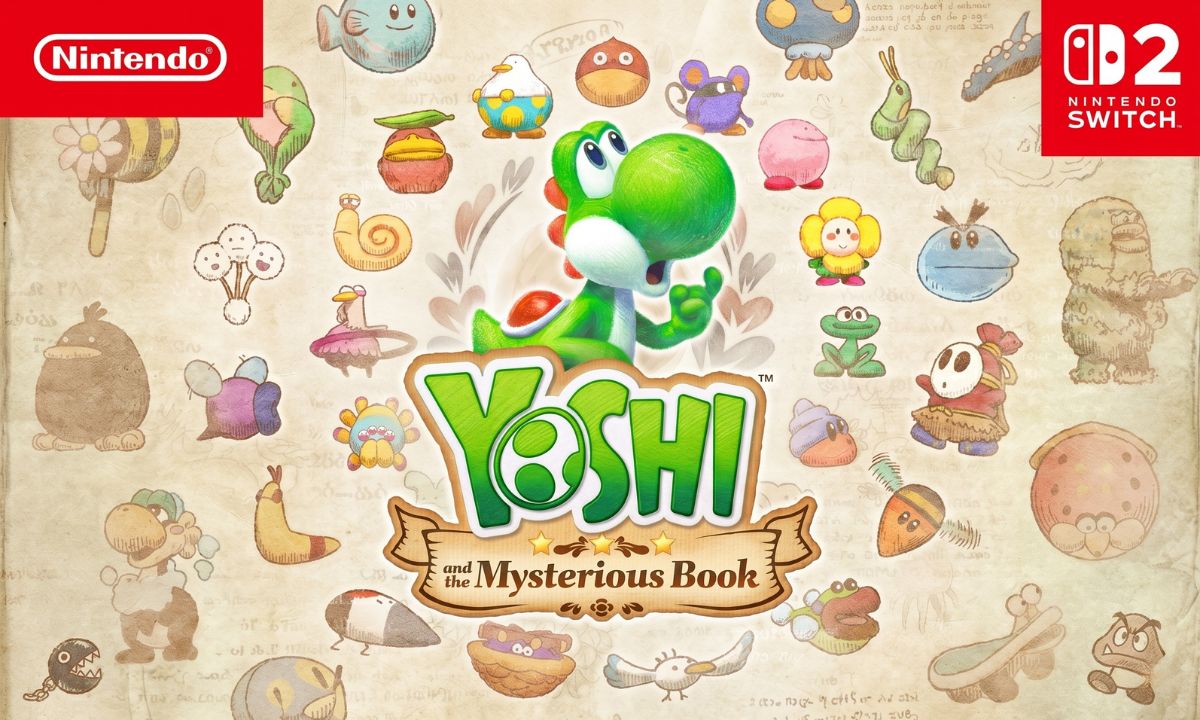
    Nintendo Announces Yoshi and the Mysterious Book For Switch 2

    Nintendo Switch 2 Exclusive

    Nintendo Announces Yoshi and the Mysterious Book

    The first new Yoshi game since 2019 trades conventional platforming for creature-driven discovery — arriving exclusively on Nintendo Switch 2 this May.

    By Rahis Saifi
    April 23, 2026
    Nintendo

    Release date
    May 21, 2026
    Platform
    Nintendo Switch 2
    Genre
    Side-scrolling platformer
    Previous Yoshi game
    Crafted World, 2019

    Nintendo has set May 21, 2026 as the release date for Yoshi and the Mysterious Book, a new Yoshi adventure launching exclusively on Nintendo Switch 2. The game was first revealed during a Nintendo Direct on September 12, 2025, held as part of the company’s Super Mario Bros. anniversary celebrations. A new trailer released on March 10, 2026 provided a closer look at the gameplay and confirmed the May 21, 2026 release window.

    The title marks the first new Yoshi game since Yoshi’s Crafted World in 2019.


    The premise

    A sentient encyclopedia falls from the sky

    Nintendo Announces Yoshi and the Mysterious Book for Switch 2

    Mr. E, a sentient talking encyclopedia, crash-lands on Yoshi’s Island. Mr. E needs Yoshi’s help investigating the unusual creatures in his pages — and using Mr. E’s magnifying glass, Yoshi can leap directly into the book to explore each creature’s habitat. According to Nintendo’s official description, Bowser Jr. makes appearances throughout those habitats, though his role in the story has not been detailed ahead of launch.


    Gameplay

    Creative problem-solving over conventional platforming

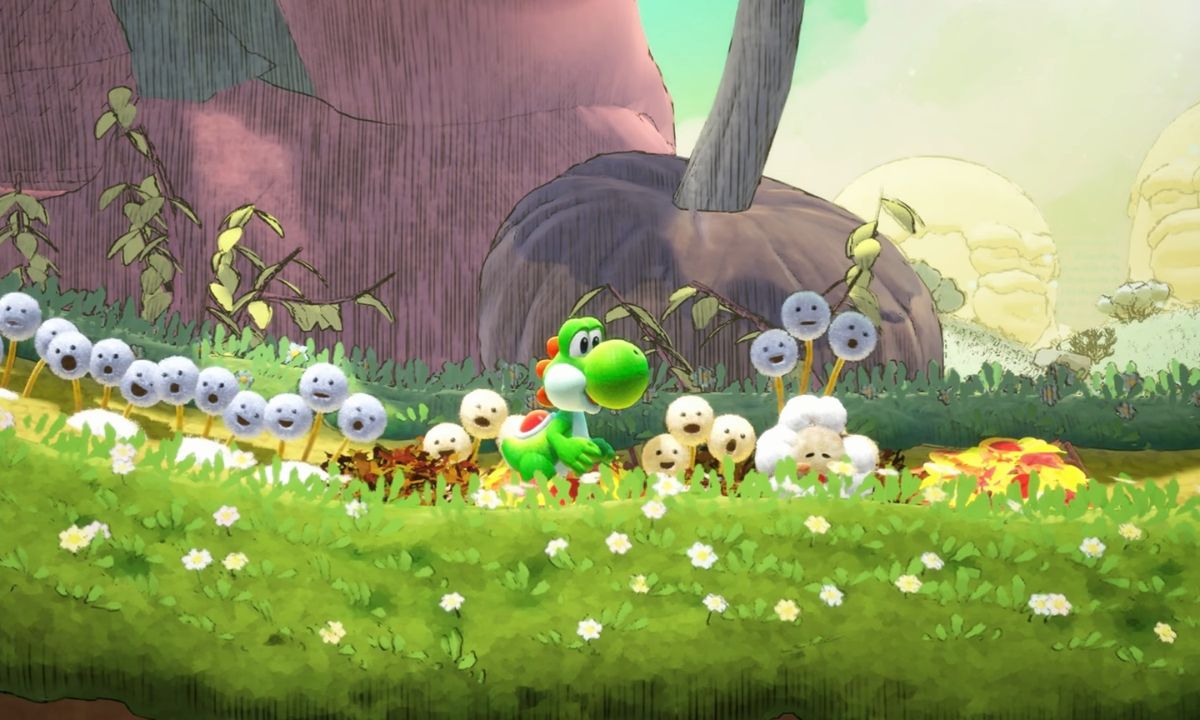
    Rather than traditional platforming, Yoshi and the Mysterious Book centers on experimenting with creatures to make discoveries. Nintendo describes a loop in which Yoshi explores each creature’s habitat, interacts with it in various ways — carrying it, jumping on it, or introducing it to surrounding elements — and logs what he learns to collect Stars and unlock more of Mr. E’s pages. Players can also give each creature a name.

    Hands-on previews, including extended sessions covered by Video Games Chronicle and IGN, report that each habitat functions as a contained, exploratory level and that discoveries are recorded visually onto the scenery itself. Those same previews documented multiple valid solutions to individual puzzles — one example involved neutralising a beehive by eating the bees, launching an egg at it, or trapping the stingers with a large nut — though these specifics come from preview coverage rather than Nintendo’s official materials.

    “Its setup feels unique among Nintendo’s other 2D platformers, and if it delivers on the early promise of systemic gameplay, it could turn out to be a real gem.”

    Video Games Chronicle, hands-on preview, April 2026


    Art direction

    A deliberate stop-motion aesthetic

    The game’s look draws on paper illustration, with painterly textures on Yoshi and the creatures, pencil-style outlines on background objects, and a selectively reduced frame rate on certain animations — such as Yoshi’s jumps — to evoke classic stop-motion filmmaking. This is an intentional artistic choice, not a performance characteristic, and was noted across multiple preview outlets as one of the title’s most immediately distinctive qualities.


    Audience and early reception

    Accessible visuals, layered depth

    Nintendo describes the game as a Yoshi adventure built around exploration and discovery. Critics who attended hands-on sessions — some lasting over an hour — reported that while the visuals and creature interactions suit a younger audience, the puzzle design offered enough complexity to challenge experienced players. Video Games Chronicle drew a comparison to The Legend of Zelda: Breath of the Wild, describing the title as Yoshi’s own shift toward player-driven, systems-based design — an interpretation from preview coverage, not an official Nintendo characterization.


    Yoshi and the Mysterious Book launches May 21, 2026, exclusively on Nintendo Switch 2. Pre-orders are available via the Nintendo eShop, GameStop, and Amazon.

  • Splatoon Raiders Launches July 23 as a Nintendo Switch 2 Exclusive

    Splatoon Raiders Launches July 23 as a Nintendo Switch 2 Exclusive

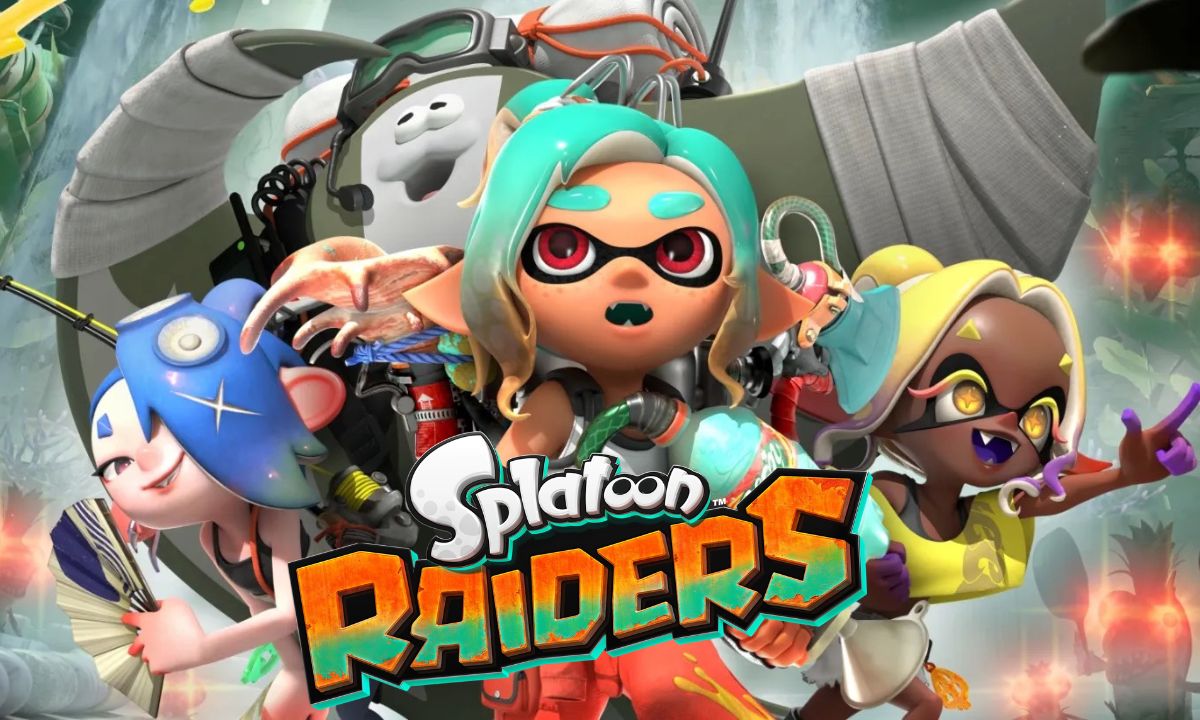
    Nintendo has confirmed the Splatoon Raiders release date as July 23, 2026, with the game launching exclusively on Nintendo Switch 2. The announcement arrived alongside a new trailer, giving the Splatoon spin-off its first firm launch date since Nintendo first revealed it in 2025.

    That confirmation comes directly from Nintendo’s latest news post and the game’s official store page. Nintendo’s April 21 post is built around a new “treasure-hunting trailer,” while the official video is titled “Splatoon Raiders — Release Date Revealed — Nintendo Switch 2.”

    Nintendo first announced Splatoon Raiders on June 10, 2025, calling it the first-ever Splatoon spin-off and introducing players to the game’s premise on the Spirhalite Islands alongside Deep Cut. At the time, Nintendo did not give a release date.

    What is confirmed now is the release date, platform, core premise, digital price, estimated file size, and the game’s broad play structure. What remains less clear is the deeper progression loop and mission structure, which Nintendo still has not broken down in full.

    Splatoon Raiders release date

    The new trailer gives the spin-off a clearer identity

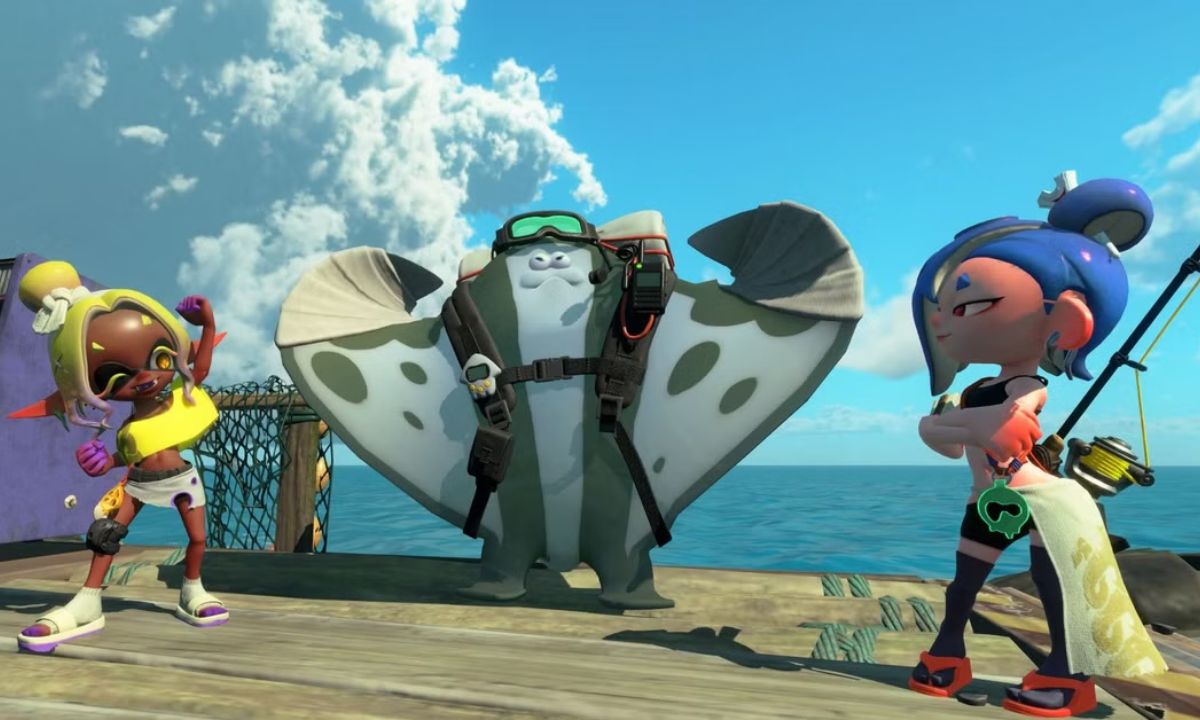
    Nintendo’s latest post says the trailer shows “character creation” and “glitzy gadgets,” while the official store page describes Splatoon Raiders as a single-player-focused action shooter. Players take on the role of a mechanic working with Deep Cut and head to the mysterious Spirhalite Islands to raid for salvage and fight Salmonids.

    That matters because the new footage and updated store copy finally make the game feel like more than a premise reveal. Nintendo is now presenting it as a defined exploration-and-combat adventure rather than just a Switch 2 spin-off with a name and a setting.

    Store details add price, file size, and co-op support

    Nintendo’s official US store page lists the digital version of Splatoon Raiders at $49.99 and gives the game an estimated file size of 20 GB. The page also confirms support for TV mode, Tabletop mode, and Handheld mode.

    The same store listing says the game is mainly a single-player adventure, but not strictly solo. Nintendo says one member of Deep Cut will accompany the player in a powerful bot, and players can also join with up to three other playersonline or via local wireless.

    Nintendo’s US store page also lists the game’s ESRB information as “Fantasy Violence.”

    US physical pricing has also been reported at $59.99, while Nintendo Life says the UK digital version is priced at £41.99and UK physical pricing is still to be confirmed.

    New Deep Cut amiibo are releasing the same day

    Nintendo is also tying the launch to new Splatoon Raiders-themed amiibo. Official Nintendo product pages show separate listings for Frye, Shiver, and Big Man, each with a July 23, 2026 release date. Nintendo says details about their functionality in Splatoon Raiders will be announced later.

    That separate-listing approach is the clearest way to frame the amiibo rollout right now. Nintendo’s own store pages support individual product entries, so it is safer to present them that way rather than as a confirmed single bundle.

    What Nintendo still has not detailed

    Nintendo has now confirmed the most important launch details: the July 23, 2026 release date, the Nintendo Switch 2 exclusivity, the game’s single-player-focused setup, optional co-op support, and the same-day rollout for the new Deep Cut amiibo.

    What Nintendo has not yet fully explained is how progression, mission variety, and the full structure of the adventure will work across the entire game. For now, the clean takeaway is simple: Splatoon Raiders has moved from an interesting spin-off announcement to a clearly dated first-party Switch 2 release with a new trailer and a fuller official product profile.

  • Pragmata Boss Guide: How to Beat Every Main Boss

    Pragmata Boss Guide: How to Beat Every Main Boss

    If you’re looking for a Pragmata boss guide, the most important thing to know is that these fights are built around hacking first and damage second. Hugh’s weapons matter, but Diana’s hacks are what expose weak points, open real damage windows, and turn bosses from bullet sponges into readable encounters. That is true from SectorGuard all the way to the final boss. Official PlayStation coverage describes the game’s combat in those exact terms, and the current Pragmata boss guides all point in the same direction.

    The main story boss lineup that is currently well supported by walkthroughs, trophy coverage, and ending guides is SectorGuard, Creator, Garden Keeper, Luna Digger, Sentinel, and Eight. Some of those fights have much better public phase-by-phase coverage than others, so the early bosses are easier to break down precisely than the late-game ones. I’m not going to fake detail where the available reputable guides are thinner.

    How Pragmata Boss Fights Guide Work in Pragmata

    Bosses in Pragmata follow the same core rule as ordinary combat, just under more pressure. Hacking is what makes enemies truly vulnerable, opens weak spots, and creates the short windows where your strongest weapons actually matter. PC Gamer’s general guide says hacking massively increases damage and becomes even more important in boss fights, especially once Diana’s Overdrive Protocol enters the loop after the first main boss.

    The Shelter matters just as much as the fight itself. PlayStation’s Shelter overview says it is where you unlock and equip discovered weapons, improve Hugh and Diana, and use long-term systems like Cabin’s Stamp Club. In practical terms, that means boss fights are partly loadout checks. If you keep bringing generic gear into specific encounters, the game will punish you for it.

    What to do before any boss attempt

    Before any boss, make sure your Primary weapon is reliable, your Attack weapon fits the kind of opening the fight gives you, and your Tactical choice either helps hacking or buys breathing room. Current post-launch advice consistently leans toward Shockwave Gun as one of the safest early offensive investments, while hacking support stays central across the whole game.

    The other simple rule is resource discipline. Don’t blow good hacking support or limited-ammo burst on weak enemies right before a boss and then wonder why the fight feels impossible. The game is built around short, meaningful damage windows, not constant firing.

    Pragmata Boss Guide: SectorGuard

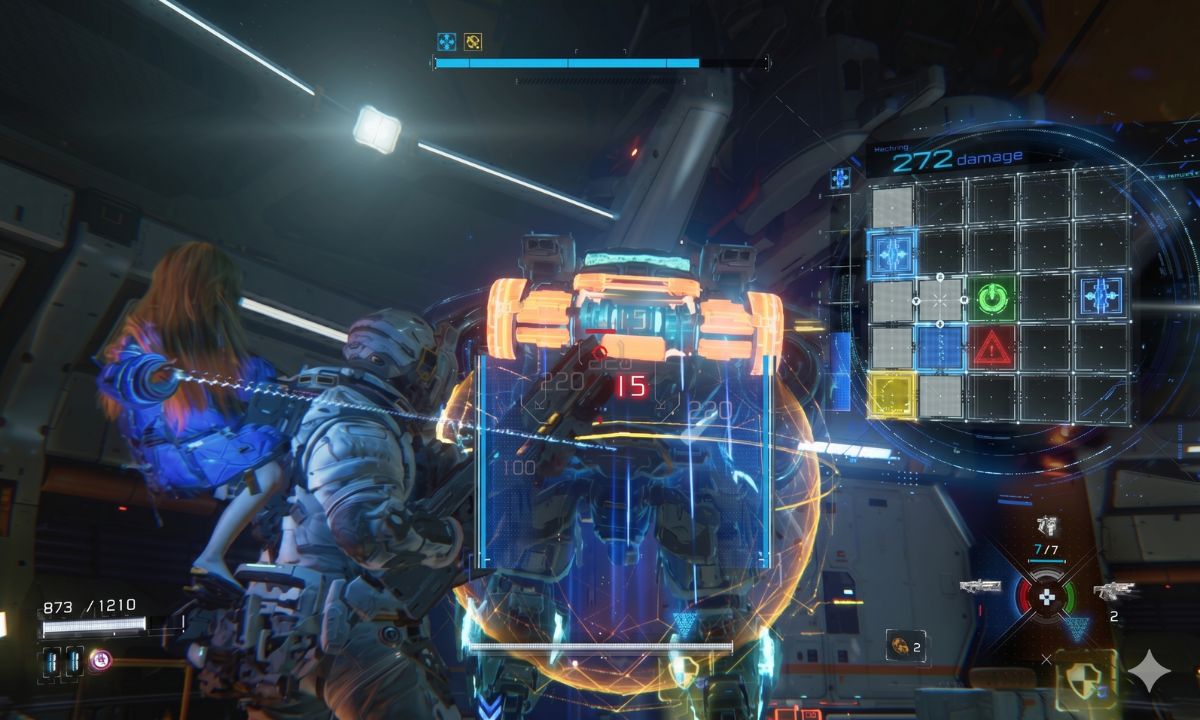
    Pragmata Grip sector guard

    SectorGuard is the first boss and the one that teaches the real shape of Pragmata’s combat. PC Gamer’s guide calls it a tutorial for Overdrive and the boss loop in general, and that’s exactly right. You need to keep hacking the boss to expose the canister on its back, then dump damage into that weak point instead of wasting ammo on low-value body shots.

    The best tools here are the ones that make those windows easier to exploit. Stasis Net helps pin the boss down, while Shockwave Gun is a clean way to cash in during close-range openings. Once SectorGuard reaches about half health, the fight gets more aggressive and introduces rockets telegraphed by red floor circles, while Diana’s Overdrive gives you the clearest damage window in the fight. If you are stuck, the fix is usually not more aggression. It is more disciplined hacking and better timing on your burst.

    Pragmata Boss Guide: Creator

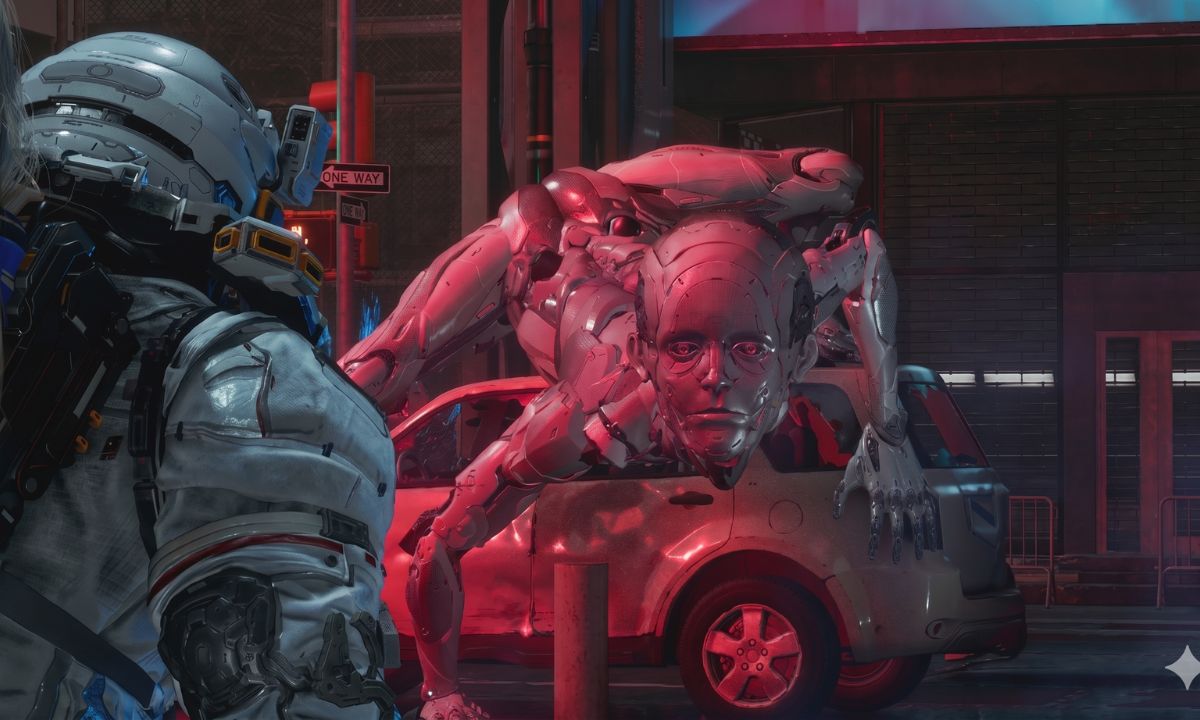
    Pragmata boss creator

    Creator is the second major boss and the point where the game stops being forgiving. Current walkthrough coverage places it at the end of Mass Production Array, and the fight is built around layered attacks, disrupted hacking access, and stronger punishment for bad dodges.

    The important detail in the currently available strategy coverage is that dodging into certain attacks is often safer than backing away, because Hugh’s dodge invulnerability frames do more work than distance alone. Creator’s face is a consistent target for much of the fight, while stronger underside damage windows appear when the boss opens up. The fight also blocks off hacking access as it goes on, forcing you to destroy glowing sections to restore control. That makes Creator less about raw offense and more about protecting the hack cycle under pressure.

    Pragmata Boss Guide: Garden Keeper

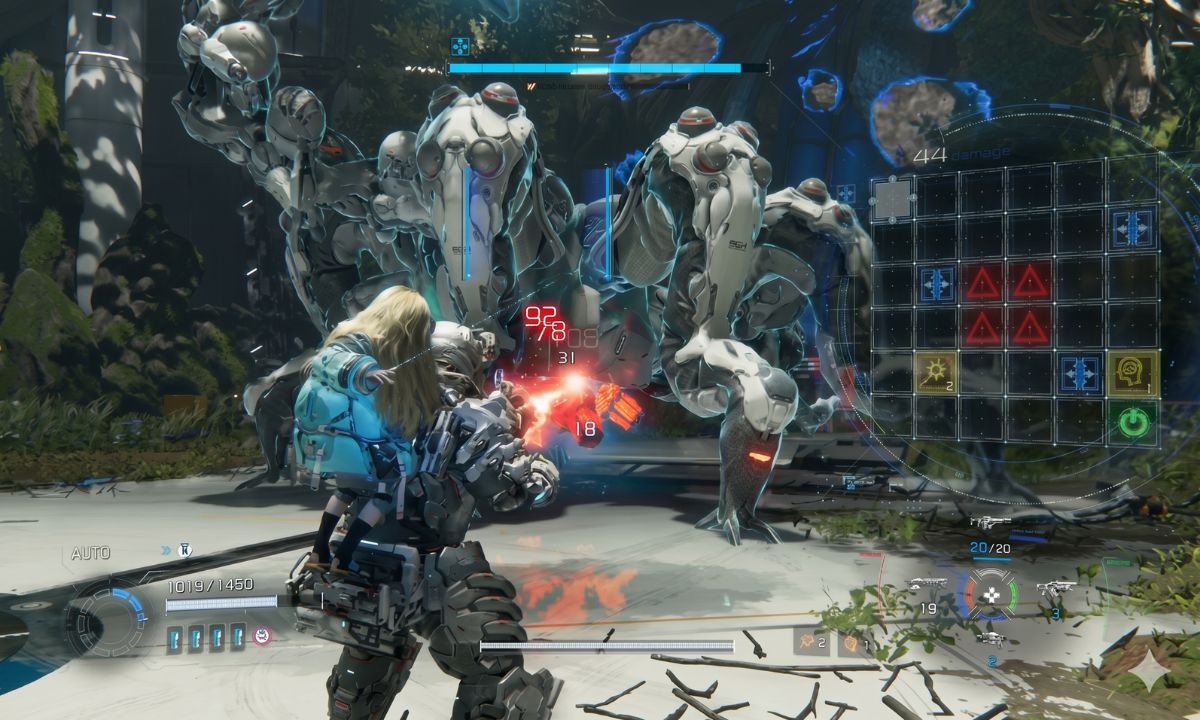
    Garden Keeper

    Garden Keeper is the boss at the end of Terra Dome’s Terrarium section, and it is where Pragmata becomes much more hectic. TheGamer’s Terra Dome walkthrough identifies the encounter there, while Polygon’s Terra Dome walkthrough describes it as a large scorpion-like machine and one of the busiest fights in the game up to that point.

    Public strategy coverage on Garden Keeper is thinner than it is for SectorGuard or Luna Digger, but the consistent theme is patience. The boss becomes punishable when it commits, especially after late dodges around its grab-style pressure. So this is not a fight where you should force openings or burn ammo out of frustration. Wait for the reveal, dodge late, and punish only when the boss clearly gives you the room to do it.

    Pragmata Boss Guide: Luna Digger

    Pragmata boss Luna Digger

    Luna Digger is one of the best-documented fights so far and it behaves very differently from the earlier bosses. PC Gamer describes it as a giant mechanical worm that spends most of the encounter underground and gives you only brief, awkward punish windows. That changes what a best loadout looks like. Area comfort picks matter less. Short-window damage matters more.

    PC Gamer recommends Charge Piercer, Photon Laser, Sticky Bombs, Homing Missile, and useful hacking nodes like Heat or Drain, plus better Auto Hack support for Diana. In phase one, the mouth is the most practical damage target when the boss surfaces or charges. In phase two, the body opens up to damage as well, missiles start filling the arena, and mini-drones become both a threat and an opportunity because you can hack them and turn them back for major damage. Luna Digger is much easier once you stop trying to maximize every early opening and save your best output for the later phase.

    Pragmata Boss Guide: Sentinel

    Pragmata boss Sentinel

    Sentinel is the late-game boss tied to Central Port. PowerPyx’s trophy roadmap confirms defeating the Sentinel as an automatic story milestone, and Polygon’s Central Port walkthrough indicates that you must cleanse the Sentinel twice before you can hack it. That already tells you what kind of fight it is: a faster, more disruptive late-game boss that makes you earn hacking access instead of simply taking it.

    Public phase-by-phase coverage for Sentinel is thinner than it is for the earlier bosses, so the honest advice has to stay close to what is actually supported. The fight appears to revolve around repeated cleansing, then hacking, then punishing in a tighter late-game arena context. So the right prep is the same, just more demanding: bring dependable hacking support, don’t waste burst too early, and expect less room for sloppy movement.

    Pragmata Boss Guide: Eight

    Pragmata boss eight

    Eight is the final boss tied to the game’s ending route. TheGamer’s ending coverage identifies Eight as the last major confrontation before the normal ending, and its true-ending guide makes clear that cleared saves return you to the pre-final-boss state rather than treating that encounter like a one-and-done cutscene.

    The problem is that detailed public phase coverage for Eight is still thin compared with SectorGuard or Luna Digger. So the useful advice here is strategic, not fake-specific: bring the late-game tools that already proved themselves, prioritize hacking support that shortens exposure, and build around reliable burst for short windows instead of carrying a lazy all-purpose kit into the finale. If a site claims precise frame-perfect Eight tech right now without a good source trail, it is probably padding.

    What changes after the credits

    The boss guide does not really end at Eight if you care about completion. PC Gamer says finishing the main story unlocks Unknown Signal, while PowerPyx’s roadmap says full completion in that mode involves stronger versions of earlier bosses and then another endgame push. So post-game bossing is more about tougher rematches than an entirely separate story-boss chain.

    What every Pragmata boss is really testing

    The pattern is simple once you stop looking at the bosses as isolated set pieces. SectorGuard teaches the loop. Creatorstresses the loop. Garden Keeper punishes impatience. Luna Digger rewards timing. Sentinel asks whether you can still cleanse, hack, and punish under late-game pressure. Eight is the final check on everything the game has been teaching you. The bosses look different, but the underlying rule never changes: if you do not respect Diana’s side of the combat system, Hugh’s firepower will never be enough.

  • Pragmata All Weapons: Where to Find All 15 Weapons

    Pragmata All Weapons: Where to Find All 15 Weapons

    If you’re looking for all weapons in Pragmata, the important thing to know is that this game does not treat weapons like ordinary shooter pickups. Every new unlock changes how you approach combat, because only Primary weapons regenerate ammo and stay with you permanently. Everything else is temporary. Once an Attack, Tactical, or Defenseweapon runs dry, it breaks and disappears.

    That single rule is what makes weapon unlocks matter so much. In a normal action game, a weapon guide is mostly a checklist. In Pragmata, it is also a progression guide. Some weapons make the early campaign far more manageable. Some become much more valuable once hacking grids get busier and more punishing. Others are tucked behind Shelter systems that are easy to overlook if you treat the game like a straight run from mission to mission.

    This guide covers all 15 weapons in Pragmata, where to find them, which ones you should care about first, which ones are easiest to miss, and which tools make the biggest difference in bosses, crowded rooms, and late-game Red Zones.

    How weapons work in Pragmata

    Hugh’s best loadout is built around four categories:

    Weapon Type What It Does
    Primary Permanent weapon with self-recharging ammo
    Attack Limited-use damage weapon
    Tactical Limited-use control or hacking support weapon
    Defense Limited-use survival or space-making tool

    Your Primary weapon is the foundation of every loadout because it is always available. Your Attack, Tactical, and Defense weapons are more situational and more valuable per use, because they are disposable.

    As you progress, the Shelter becomes the center of that progression. It is where you unlock discovered weapons permanently, improve Hugh and Diana’s combat tools, and interact with systems like Cabin’s Stamp Club, which can reward you with weapons and other major upgrades. Later on, you can also unlock the ability to carry two Attack weapons and two Tactical weapons at once, which makes your loadout much more flexible.

    That is when the game really opens up. Early on, you are mostly choosing one answer per slot. Later, you can start pairing a general-use tool with a more specialized option.

    All 15 weapons in Pragmata and where to find them

    Here is the full weapon list and each unlock location:

    Weapon Type First Available
    Grip Gun Primary Starting weapon
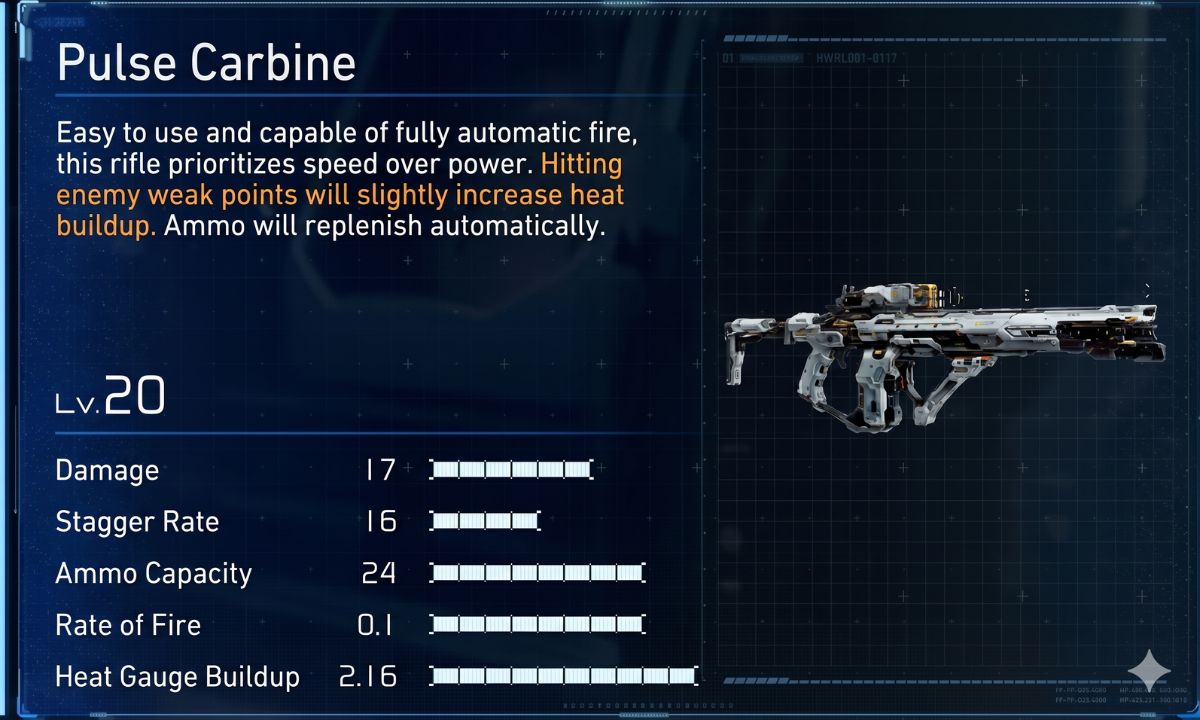
    Pulse Carbine Primary Sector 3: Terra Dome, Plant Factory
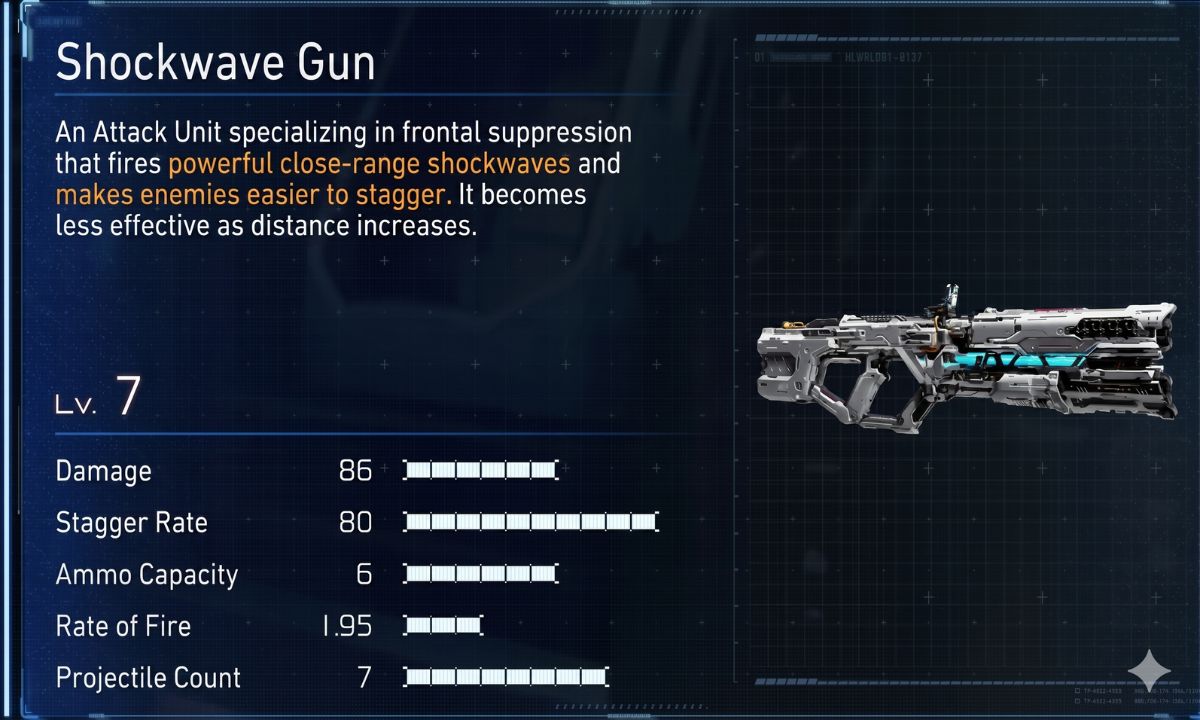
    Shockwave Gun Attack Sector 1: Solar Panel Plants, Power Distribution Center
    Charge Piercer Attack Sector 2: Mass Production Array, Side Alley
    Photon Laser Attack Sector 3: Terra Dome, Soil Research
    Homing Missiles Attack Sector 4: Lunum Mines, Mine Entrance
    Jackhammer Attack Complete the game
    Stasis Net Tactical Sector 1: Solar Panel Plants, Power Distribution Center
    Riot Blaster Tactical Sector 2: Mass Production Array, Shopping District
    Sticky Bombs Tactical Sector 3: Terra Dome, Eco Modeling Lab
    Code Generator Tactical Specialist Stamp Board, triple bingo
    Hacking Mines Tactical Director Stamp Board, triple bingo
    Decoy Generator Defense Sector 2: Mass Production Array, Lim Recycling Facility
    Impact Barrier Defense Sector 4: Lunum Mines, Crane Operation Yard
    Drone Hive Defense Associate Stamp Board, triple bingo

    That list already highlights one of the game’s most important patterns. Most weapons come through normal sector progression, but Code Generator, Hacking Mines, and Drone Hive are tied to Cabin’s Stamp Club, while Jackhammer sits behind game completion. So if you ignore the Shelter’s long-term reward systems, you can finish the campaign without ever collecting the full arsenal.

    Best weapons to prioritize first

    Not every weapon matters equally when you get it. Some unlocks change the game immediately, while others only become valuable in more specific situations.

    Shockwave Gun

    Pragmata Shockwave Gun

    The first weapon most players should care about is the Shockwave Gun. It arrives early, hits hard, staggers reliably, and remains useful long after more options start opening up. It is simple, effective, and works in both standard encounters and boss damage windows.

    More importantly, it solves a real early-game problem: limited offensive power under pressure. When the game is still teaching you how to manage movement, hacking, and enemy timing at once, a weapon that gives you strong, immediate payoff matters a lot.

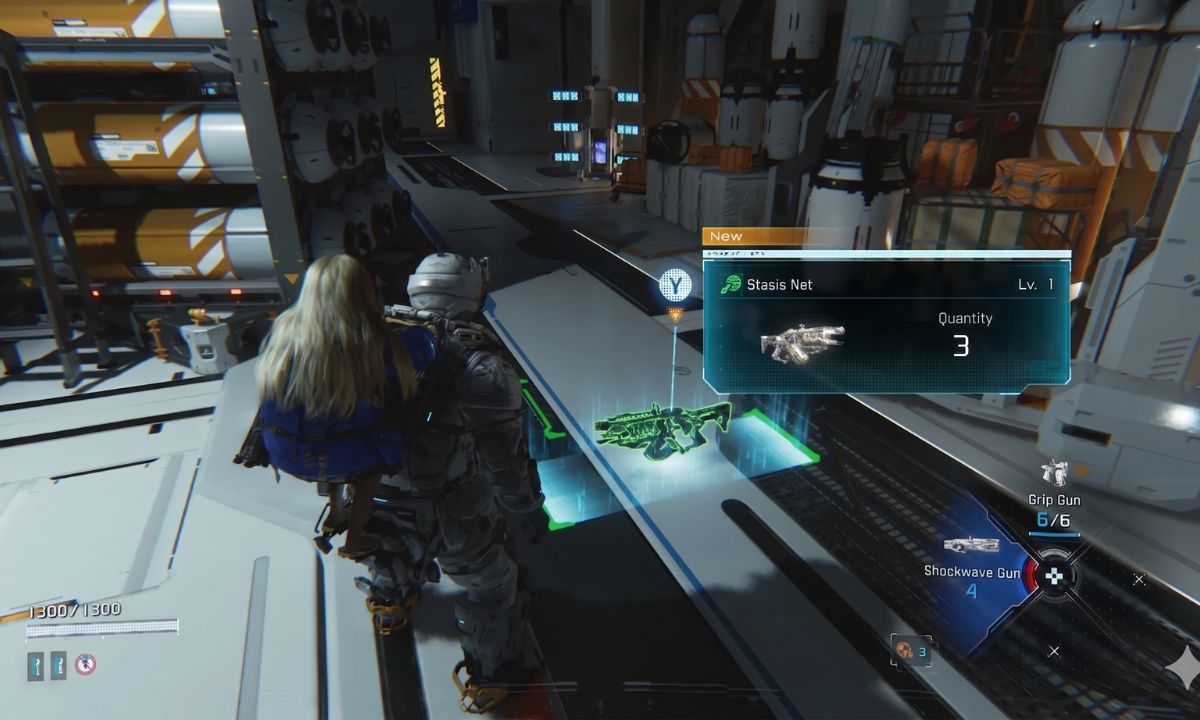
    Stasis Net

    Pragmata Stasis Net

    The Stasis Net is the other early standout. It is not flashy, but it makes the game safer. Freezing one enemy while you deal with another gives you breathing room when fights are getting messy, and that kind of control is worth more than raw damage in many early encounters.

    Grip Gun and Pulse Carbine

    Pragmata Grip Gun and Pulse Carbine

    Your Grip Gun matters because it never leaves your loadout. That alone makes it a sensible place to invest some upgrade resources. Later, the Pulse Carbine becomes a meaningful second Primary option once you reach Sector 3, especially if you prefer sustained fire over the Grip Gun’s simpler pace.

    That said, do not dump everything into Primary upgrades and neglect the rest of your kit. The best approach is balance. Your Primary weapon is your constant fallback, but hacking support, health, and situational weapons often make a bigger difference in whether you survive difficult encounters.
    The best early priorities overall

    For most players, the best first priorities are:

    • Shockwave Gun, because it is strong, early, and easy to use well
    • Stasis Net, because it immediately lowers combat pressure
    • Hacking support, because hacking is central to how you open enemies up
    • Health and survivability, because Pragmata punishes sloppy defensive play

    Which weapons are easiest to miss

    Some weapons are harder to miss than others. The ones tied to story progression usually show up naturally if you explore properly. The weapons most players are likely to miss or delay are the ones hidden behind side systems or post-game progression.

    Code Generator, Hacking Mines, and Drone Hive

    These are the three most obvious missable weapons because they are tied to Cabin’s Stamp Club, not normal mission pickups.

    That matters for two reasons. First, Cabin Coins are limited, so poor choices on Stamp Boards can slow your access to better rewards. Second, some board rewards are hidden until you reveal them, which makes it easy to spend carelessly if you are not paying attention.

    If you treat the Shelter like downtime between missions instead of part of the progression loop, these are the weapons you are most likely to miss.

    Jackhammer

    The fourth easy-to-miss weapon is Jackhammer, but for a different reason. It is not hidden in a sector or tucked behind a side route. It is a post-game unlock, which means first-run players should not waste time searching for it during the campaign.

    Why this matters

    The broader point is that Pragmata does not put every important reward directly in front of you. Some of the best or rarest weapons are tied to long-term Shelter engagement, not just exploration. If your goal is to complete the arsenal, you need to pay attention to both mission progress and Cabin’s reward systems.

    Best weapons by situation

    The best weapon in Pragmata depends on the problem you are trying to solve. A strong all-purpose loadout is useful, but the game is better understood as a series of combat situations that reward different tools.

    Best weapons for a standard first playthrough

    For a first run, the safest general setup is built around:

    • Grip Gun or Pulse Carbine
    • Shockwave Gun
    • Stasis Net
    • Decoy Generator

    Later, Sticky Bombs become worth rotating into that setup once Sector 3 opens up.

    This is a good first-playthrough core because it covers the basics without overcomplicating things. Your Primary gives you constant damage. Shockwave Gun gives you strong burst. Stasis Net helps control the room. Decoy Generator buys you time when things start collapsing.

    That combination is not the only workable loadout, but it is one of the easiest to trust through most of the campaign.

    Best weapons for bosses

    Boss fights change the rules. You get fewer clean damage windows, and every wasted shot hurts more.

    Charge Piercer

    The Charge Piercer becomes much more valuable in boss fights than in ordinary room clearing. It works well in narrow attack windows and rewards patience more than panic. If a boss forces you to wait for the right moment to punish, Charge Piercer fits that rhythm better than many other Attack weapons.

    Sticky Bombs

    Sticky Bombs matter in boss fights because their real value is not direct damage. They help simplify hacking grids, which reduces how long you stay exposed while trying to make the boss vulnerable. In fights where pressure never really stops, that can be a huge difference-maker.

    Homing Missiles

    Homing Missiles are not a universal answer, but they become practical when a boss is highly mobile or spends a lot of time airborne. In those situations, they remove some of the frustration that comes from trying to manually track hard-to-hit targets.

    Best weapons for crowd control

    When a room fills up with enemies, the priority shifts away from perfect single-target damage and toward keeping the fight under control.

    Stasis Net

    The Stasis Net remains one of the cleanest crowd-control tools in the game. Freeze one target, deal with another, then circle back before the window closes. It is a straightforward loop, but it works.

    Riot Blaster

    Once you unlock the second Tactical slot, Riot Blaster becomes more interesting. It is not as universally useful as Stasis Net, but it helps in situations where enemies cluster tightly enough that single-target tools start to feel inefficient.

    Best weapons for late-game and Red Zones

    Late-game encounters and Red Zones ask more from your loadout because they combine tighter margins, stronger enemies, and more punishment for mistakes.

    Code Generator

    Code Generator becomes a serious late-game tool because it improves hacking performance rather than just raw damage. In difficult rooms, that can be more important than another offensive option. It is one of the clearest examples of a weapon whose value grows with the game’s complexity.

    Sticky Bombs

    Sticky Bombs age very well into the late game because enemy hacking grids become more cluttered and more punishing. Anything that makes those grids cleaner becomes more valuable as the campaign goes on.

    Photon Laser and Charge Piercer

    Once your second Attack slot is open, Photon Laser and Charge Piercer make strong situational pairings. Photon Laser helps at range, while Charge Piercer remains useful when you want high burst in tight windows.

    Stamp Board weapons explained clearly

    Cabin’s Stamp Club is easy to underestimate because it initially looks like a side activity. It is not. It is one of the game’s most important long-term progression systems.

    The basic structure is simple. You earn Cabin Coins, spend them on bingo-style boards in the Shelter, and unlock rewards as you fill in rows and hit bingo milestones. Some of those rewards are cosmetic or utility-based, but some are major combat tools.

    For weapons, the key Stamp Board rewards are:

    • Drone Hive — Associate Board, triple bingo
    • Code Generator — Specialist Board, triple bingo
    • Hacking Mines — Director Board, triple bingo

    That means two things.

    First, if you ignore Stamp Boards, you are not just ignoring side content. You are skipping real combat options.

    Second, because Cabin Coins are limited and many rewards are hidden until revealed, you should not spend carelessly. The Stamp Club is part of combat progression, not just collectible padding.

    The most important takeaway

    If there is one thing worth remembering, it is this: Pragmata is not really about collecting a giant pile of weapons and calling it a day. It is about understanding why each weapon exists and what problem it helps solve.

    For most players, the best early priorities are Shockwave Gun, Stasis Net, and balanced upgrades to hacking, health, and your Primary weapon. The easiest weapons to miss are the three hidden behind Cabin’s Stamp Club, plus the post-game Jackhammer. The safest first-playthrough setup revolves around Shockwave Gun, Stasis Net or Sticky Bombs, and Decoy Generator, while Charge Piercer, Homing Missiles, and Code Generator become more valuable when bosses or late-game challenge rooms demand more specialized answers.

    That is what makes the arsenal in Pragmata interesting. The full weapon list is not just there for completionists. It maps the game’s learning curve: early survival, cleaner control, stronger hacking support, and finally late-game tools that reward players who actually engage with the Shelter instead of treating it like dead time.

  • Konami Announces eBaseball PRO SPIRIT 2026 for PS5 and PC

    Konami Announces eBaseball PRO SPIRIT 2026 for PS5 and PC

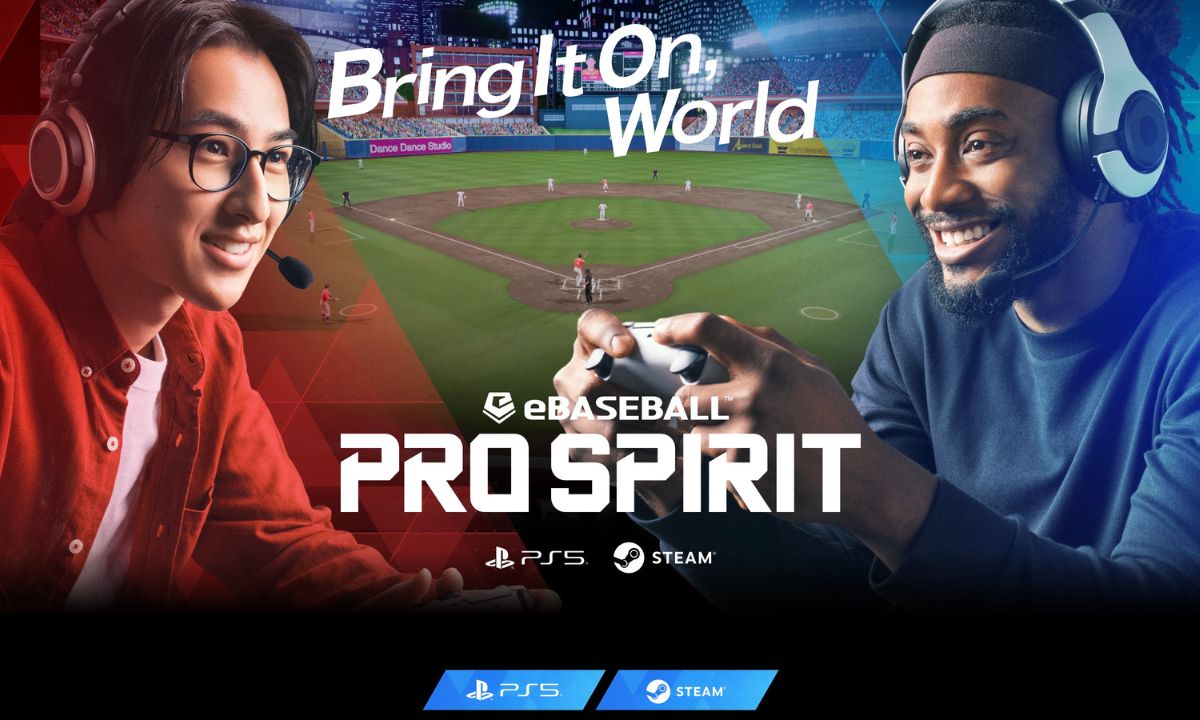
    Konami has announced eBaseball PRO SPIRIT 2026 for PlayStation 5 and PC via Steam, with a worldwide digital launch confirmed for July 16, 2026. The game is priced at $59.99 and pre-orders are live right now on both platforms.

    The Professional Baseball Spirits series has run since its first home console release in 2004 and has historically remained a Japan-exclusive franchise in its full numbered form. The free-to-play eBaseball PRO SPIRIT launched globally on March 5, 2026, marking the series’ first worldwide release. eBaseball PRO SPIRIT 2026 now follows as the first premium numbered entry in the series to be made available globally with English support.

    Built on the eBaseball Engine

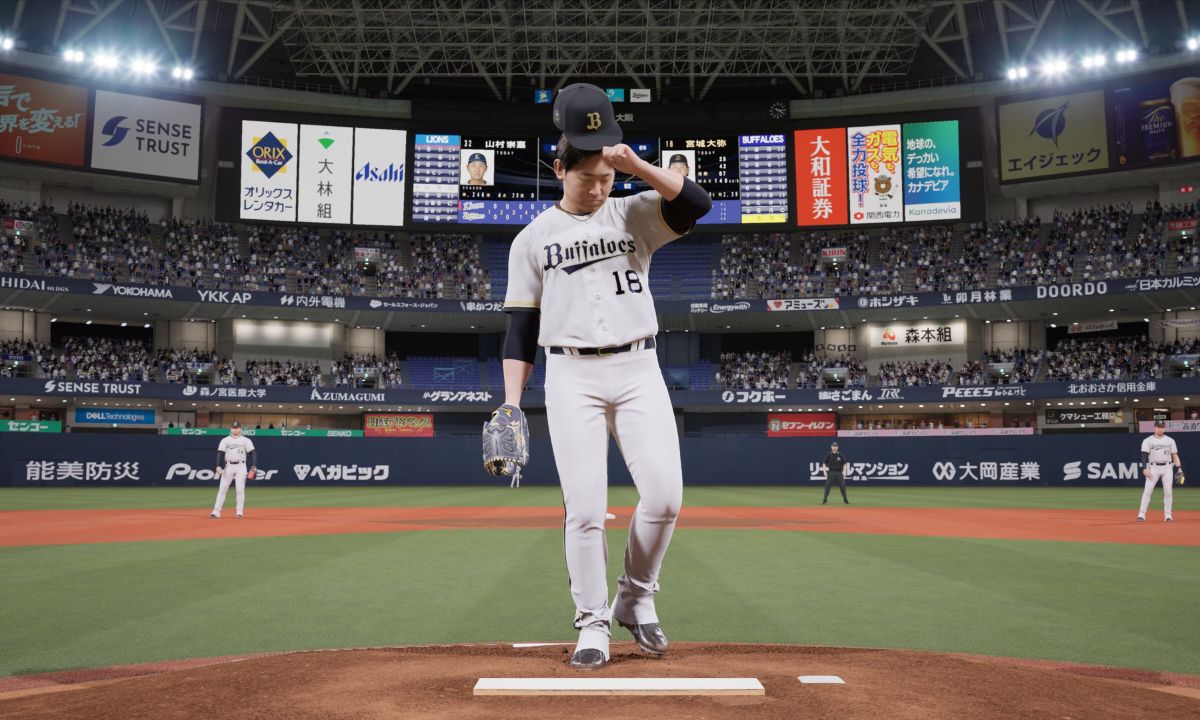
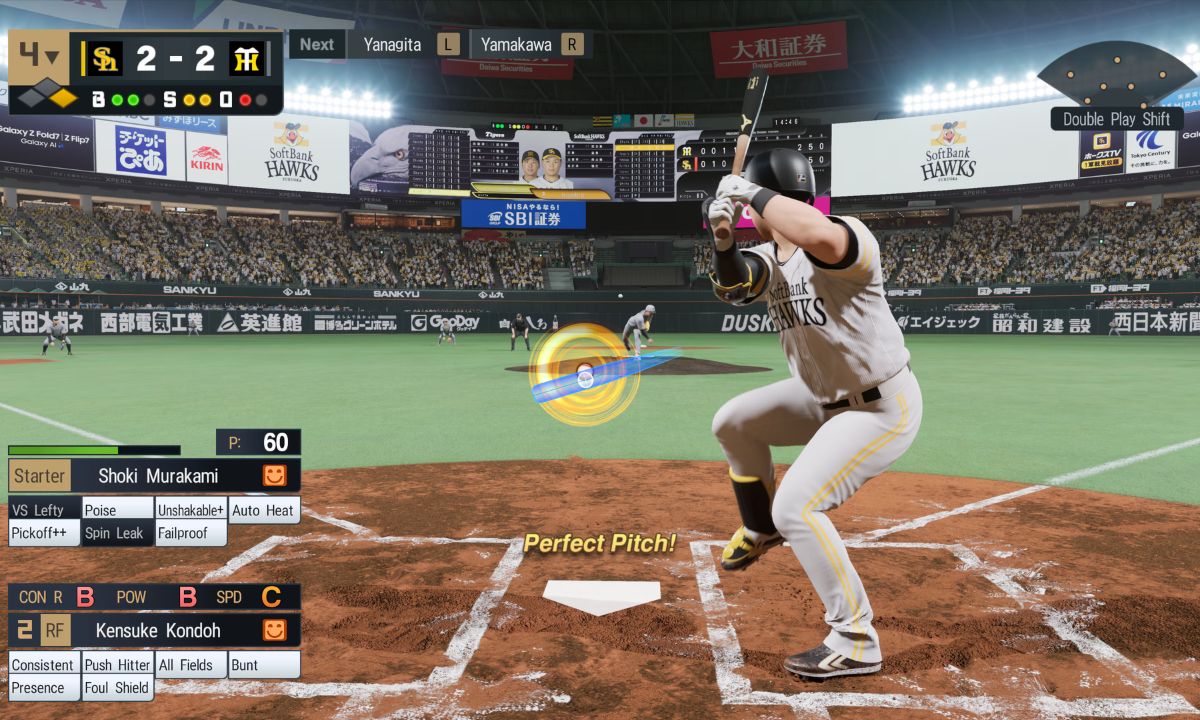
    eBaseball PRO SPIRIT 2026 runs on Konami’s proprietary eBaseball Engine, designed to recreate the experience of watching and playing baseball inside a real stadium. The official product pages highlight laser-scanned stadium reproductions, detailed player models with realistic hair and skin textures, and impulse response measurements used to capture authentic stadium acoustics. The game is powered by Unreal Engine, and broadcast-style play-by-play commentary is available in English at launch — though colour commentary is Japanese-only for now.

    eBaseball PRO SPIRIT 2026

    Game Modes

    Konami’s official site and store listings show eBaseball PRO SPIRIT 2026 launching with a wide range of modes. The five modes highlighted in marketing materials are:

    Exhibition — Standalone versus matches where you set the stadium, rules, and teams before jumping straight into a game.

    Season — Full team management across a complete season. The Active Player Draft system is included for the first time in this mode, adding a new layer to long-term roster building.

    Star Player — Create a single player and guide them through up to 30 years of a professional baseball career, balancing on-field performance with off-field life decisions.

    Hakkyu no Kiseki — High school baseball management across multiple seasons. Coach your program through practice, in-game tactics, and roster turnover as seniors graduate and new first-years arrive. The DH rule is now included for the first time in this mode.

    Spirits — Online competitive play where players build custom rosters and compete against opponents worldwide.

    Beyond these five highlighted modes, the official site and store listings also reference Live Championship, Live Scenario, Grand Prix, Home Run Derby, Team Edit, and Edit Share among the available content at launch.

    Pre-Order Bonus and the Shohei Ohtani Incentive

    eBaseball PRO SPIRIT 2026 PS5

    Players who pre-order receive 1,000,000 VP — the in-game currency used in the Prospi Shop to boost players and purchase items. This bonus is confirmed on both the PS5 and Steam product pages.

    The early purchase bonus is the more notable incentive. Anyone who buys the game by December 31, 2026 at 11:59 PM JST — listed on the PlayStation Store as December 31, 2026 at 2:59 PM UTC — unlocks SAMURAI JAPAN 2026 “Shohei Ohtani”, an exclusive player card tied to Japan’s 2026 national team. Ohtani serves as Konami’s baseball games ambassador, making this the headline incentive for fans wanting him in their lineup from day one.

    One Important Regional Limitation

    The 2026 World Baseball Classic mode is included in the game but is only available in Japan and the Asia region. This is confirmed on the PlayStation Store product page. Players in North America and Europe will not have access to WBC content at launch.

    Editions and Availability by Region

    Outside Japan, eBaseball PRO SPIRIT 2026 is available as a digital download only on both PS5 and Steam at $59.99 / £39.99 / €49.99.

    In Japan, Konami is offering a wider range of editions across both platforms. The Japanese product page lists a PS5 package edition, PS5 digital edition, PS5 Digital Deluxe Edition, Steam digital edition, and Steam Deluxe Edition. The Digital Deluxe Edition on PS5 in Japan is priced at 10,978 yen.

    The Difference Between This and the Free Version

    The free-to-play eBaseball PRO SPIRIT that launched globally on March 5, 2026 is a separate product from eBaseball PRO SPIRIT 2026. The free version introduced the engine and competitive online play to an international audience. The premium 2026 entry is the complete simulation experience — including Season, Star Player, Hakkyu no Kiseki, and all the additional modes listed above — that the free version does not offer.

    If you are still deciding whether Konami’s new game is the better buy, read our eBaseball PRO SPIRIT 2026 vs MLB The Show 26 comparison.

    Key Details

    Developer and Publisher: Konami Release Date: July 16, 2026 Platforms: PlayStation 5 and PC via Steam Price:$59.99 / £39.99 / €49.99 Pre-order Bonus: 1,000,000 VP Early Purchase Bonus: SAMURAI JAPAN 2026 Shohei Ohtani — available to buyers through December 31, 2026 at 11:59 PM JST Physical editions: Japan only WBC Mode:Japan and Asia region only Pre-orders: Live now on PS5 and Steam

  • Mouse: P.I. For Hire Release Time, Preload, and Premium Edition Details Explained

    Mouse: P.I. For Hire Release Time, Preload, and Premium Edition Details Explained

    Mouse: P.I. For Hire, the hand-drawn rubber hose FPS from Fumi Games and PlaySide Studios, launches globally on April 16, 2026 — and if you are planning to jump in from the moment it unlocks, you will want to know exactly when that is, whether a preload is available, and which edition best suits what you are looking for.

    This guide covers everything: the confirmed global release times broken down by time zone, the current state of preload availability, and a full breakdown of every edition — digital and physical — including what is inside the premium Mouseburg Edition and how much each version will set you back.

    Mouse: P.I. For Hire Release Time — Key Global Time Zones

    Mouse: P.I. For Hire, the hand-drawn rubber hose FPS from Fumi Games and PlaySide Studios, launches globally on April 16, 2026

    Fumi Games has confirmed that Mouse: P.I. For Hire will launch simultaneously across all regions on April 16, meaning there is no need to set your VPN to New Zealand to get in early. Everyone gets access at the same moment worldwide.

    The confirmed global unlock times are as follows:

    Region Time Zone Release Time
    🇺🇸 US West Coast Pacific Time (PDT) 8:00 AM
    🇺🇸 US Central Central Time (CDT) 10:00 AM
    🇺🇸 US East Coast Eastern Time (EDT) 11:00 AM
    🇧🇷 Brazil Brasilia Time (BRT) 12:00 PM
    🇬🇧 United Kingdom British Summer Time (BST) 4:00 PM

    Timezones with an April 17 release date

    • 🇦🇺 Australian Eastern Standard Time (AEST): 01:00
    • 🇳🇿 New Zealand Standard Time (NZST): 03:00

    These times apply across all launch platforms — PlayStation 5, Xbox Series X/S, Nintendo Switch 2, and PC via Steam and the Microsoft Store.

    It is worth noting that Mouse: P.I. For Hire was originally scheduled for release in early 2026 before a brief delay pushed it to April, which the studio attributed to a final polish pass ahead of launch.

    Mouse: P.I. For Hire Preload — Is It Available?

    As of the time of writing, neither Fumi Games nor publisher PlaySide Studios has publicly announced a preload window for Mouse: P.I. For Hire on any platform. No preload information appears on the official FAQ, Steam page, or console store listings at this stage — though that could change closer to the April 16 unlock. It is worth checking your platform’s store page on the day for any last-minute preload availability.

    There is also no early access for either edition of the game. According to pre-release coverage, owners of both the standard and deluxe versions unlock at the same time as everyone else — no early entry is included as part of either purchase.

    Mouse: P.I. For Hire — All Editions Explained

    Mouse: P.I. For Hire, the hand-drawn rubber hose FPS from Fumi Games and PlaySide Studios, launches globally on April 16, 2026

    Mouse: P.I. For Hire is available in several configurations across digital and physical formats, with pricing that varies depending on platform and edition. Here is a complete breakdown.

    Digital Standard Edition — $29.99

    The digital standard edition includes the base game and nothing else. It is available on April 16, 2026, across the following platforms at a price of $29.99 USD:

    • PC via Steam
    • PlayStation 5
    • Xbox Series X/S
    • Nintendo Switch 2

    Xbox players purchasing the digital standard edition also benefit from Xbox Play Anywhere support, meaning a single purchase covers both the Xbox Series X/S console version and the PC version via the Microsoft Store at no additional cost.

    Digital Deluxe Edition (Steam Only) — $39.99

    A Digital Deluxe Edition is available exclusively on Steam for $39.99 USD — $10 more than the standard edition. It includes:

    • The base game
    • Access to the first major story DLC expansion (releasing at a later date)
    • The full Original Game Soundtrack (OST), featuring compositions by Patryk Scelina and a piece by electro swing artists Caravan Palace
    • A digital comic book expanding on the game’s story and characters

    The DLC inclusion makes the Digital Deluxe Edition the better long-term value for players who are confident they will want to continue with Mouse: P.I. For Hire after the main campaign. No specific release date for the DLC has been confirmed at the time of writing.

    Physical Standard Edition — from $29.99 (July 10, 2026)

    Physical editions of Mouse: P.I. For Hire are not available at launch. The physical standard edition releases separately on July 10, 2026, with pricing that differs by platform:

    • PlayStation 5 (disc): $29.99 USD
    • Nintendo Switch 2 (game-on cartridge): $39.99 USD

    The Switch 2 physical version costs more because the full game is included on the cartridge itself — it is not a card containing a download code.

    Note that a physical standard edition for Xbox Series X is not part of the announced lineup. Xbox players looking for a physical copy will need to opt for the Mouseburg Edition.

    Physical Deluxe “Mouseburg Edition” — from $49.99 (July 10, 2026)

    The premium physical release is the Mouseburg Edition, also arriving on July 10, 2026. This is the collector’s package for the game and includes a substantial array of physical extras alongside the game itself.

    Pricing by platform and region:

    Platform Price (USD) Availability
    PlayStation 5 (disc) $49.99 USA, Canada, Latin America, Europe, Middle East, East Asia, Australia
    Xbox Series X (disc) $49.99 Europe, Middle East, East Asia, Australia
    PC (Steam code in box) GBP £44.99 / EUR €49.99 Europe, Middle East, East Asia, Australia
    Nintendo Switch 2 (cartridge) $59.99 USA, Canada, Latin America, Europe, Middle East, East Asia, Australia

    What is inside the Mouseburg Edition:

    • The base game
    • A 7″ vinyl record featuring four tracks from the Official Game Soundtrack, including original compositions by Patryk Scelina and a track by Caravan Palace
    • A double-sided poster (340mm x 340mm) — a map of Mouseburg on one side and a schematic of Jack Pepper’s “Micer” pistol on the other
    • A printed comic book with two sticker sheets
    • 33 Mouseburg Baseball Trading Cards, based on the in-game baseball card mini-game
    • 3 premium Mouseburg postcards

    The Mouseburg Edition is the only physical option for Xbox Series X players and the only physical version for PC. Regional availability restrictions do apply, so players outside the listed regions should check local retailer availability before ordering.

    Is Mouse: P.I. For Hire on Xbox Game Pass or PS Plus?

    Mouse: P.I. For Hire is not planned for Xbox Game Pass at launch — Fumi Games has confirmed this explicitly. As for PlayStation Plus, no official statement has been made either way, and the PlayStation Store page shows a standard purchase listing with no indication of a PS Plus inclusion. Until the developer or Sony confirms otherwise, players on both platforms should plan to purchase the game separately.

    What About PS4, Xbox One, and Nintendo Switch?

    Mouse: P.I. For Hire will not launch on PlayStation 4, Xbox One, or the original Nintendo Switch on April 16. Fumi Games has confirmed that versions for those platforms are planned, but launch timing will be announced separately at a later date.

    Which Edition Should You Buy?

    At $29.99, Mouse: P.I. For Hire sits competitively for most players, the digital standard edition alongside other notable indie releases on Steam this April — making it one of the better-value launches of the month regardless of which edition you choose.

    If you are on Steam and plan to continue with the game after the main campaign, the Digital Deluxe Edition at $39.99 is worth considering for the DLC access and OST alone, particularly given that the DLC will likely be priced separately when it releases.

    If you want a physical copy, the standard physical edition covers the basics when it arrives on July 10 — though Switch 2 owners will pay $39.99 for the cartridge version. For collectors, the Mouseburg Edition is the most complete package available and includes enough physical extras to justify its premium pricing for dedicated fans of the game.

    Mouse: P.I. For Hire was developed by Fumi Games and published by PlaySide Studios. It launches digitally on April 16, 2026, on PlayStation 5, Xbox Series X/S, Nintendo Switch 2, and PC via Steam. Physical editions release July 10, 2026. Releases on PlayStation 4, Xbox One, and Nintendo Switch will be confirmed at a later date.

  • Mouse: P.I. For Hire Launches April 16 on PS5, Xbox, Switch 2, and PC

    Mouse: P.I. For Hire Launches April 16 on PS5, Xbox, Switch 2, and PC

    Fumi Games and PlaySide Studios are set to release Mouse: P.I. For Hire on April 16, 2026, across PlayStation 5, Xbox Series X/S, Nintendo Switch 2, and PC via Steam — with the $29.99 digital release drawing broadly favourable early reviews.

    The game puts players in the role of Jack Pepper, a war veteran and former police officer turned private detective operating in the fictional, corrupt city of Mouseburg. Its visual approach sets it apart from virtually everything else on the market: every character, weapon, and enemy is drawn by hand, frame by frame, in the black-and-white rubber hose style of 1930s cartoons — layered over three-dimensional environments. At least one reviewer described the blend as unlike anything they had encountered in a current release.

    Versions for PlayStation 4, Xbox One, and the original Nintendo Switch are also planned, though Fumi Games has stated that launch timing for those platforms will be detailed separately.

    A Warsaw Studio’s Unlikely Critical Breakthrough

    Mouse P.I. For Hire Xbox

    Fumi Games, an independent studio based in Warsaw, Poland, is a relatively small indie outfit, and the critical reception to Mouse: P.I. For Hire has been all the more striking for it. Advance reviews, published ahead of the April 16 unlock, have been broadly enthusiastic across major outlets.

    One PC Gamer reviewer called it the best shooter they had played in ages, citing the rare achievement of a game whose visual style and underlying mechanics are equally strong. Critics at Kotaku and Final Weapon have offered similarly strong praise, with Final Weapon noting that many full-priced games offer considerably less content and polish than this release. On Metacritic, the game currently holds an aggregated score of 81 on PC and 75 on PS5 — a strong showing for a debut of this kind.

    The praise is not entirely without reservation. A small number of reviewers noted that the campaign’s default difficulty leans slightly easy in its middle sections, and that some late-game sequences drag relative to the pace of the rest of the experience. A few critics also felt the detective mechanics — the investigative element implied by the game’s title — are lighter than they might have been. But these are minority notes in an otherwise favourable reception.
    The Story: Three Cases, One Sprawling Conspiracy

    The narrative begins with a routine job. Jack Pepper, voiced by Troy Baker, takes on a missing persons case involving a former war comrade and amateur magician named Steve Bandel. Within hours, that single case expands into three interconnecting investigations — a murdered woman whose friends want answers, a wave of kidnappings targeting Mouseburg’s shrew population, and a shadowy political movement with ambitions that reach far beyond anything Pepper initially suspects.

    Players piece the story together by collecting physical clues scattered throughout each level, pinning them to a corkboard in Pepper’s office, and connecting threads between cases as the campaign progresses. The narrative touches on themes of institutional corruption, class discrimination, and political extremism — heavier territory than the game’s cartoon aesthetic might suggest — and Baker’s voice performance has been widely singled out as a particular strength, balancing the script’s dry humour with genuine dramatic weight.

    The campaign spans more than 20 hand-crafted levels set across a variety of Mouseburg locations: city streets, a Hollywood-style film studio, an opera house, underground sewers, and poisonous swamps among them. Reviewers who completed the main story report a runtime of approximately 13 to 15 hours, extending to 18 or 20 hours for players who pursue the game’s substantial collection of side content.

    Gameplay: Movement, Arsenal, and Boomer Shooter Roots

    Mouse P.I. For Hire Xbox

    In terms of moment-to-moment play, Mouse: P.I. For Hire is a fast, movement-driven shooter with no cover system and no regenerating health. Critics have drawn comparisons to classic shooters including Doom, BioShock, and Quake, as well as to the broader boomer shooter tradition — games built on the principle that staying still is the surest way to die. Pepper begins each encounter with a dash ability and his fists, which the game refers to, accurately, as his mitts. As the campaign progresses, he unlocks a double jump, a wall run, a tail-powered hover descent, and a grappling hook, each of which integrates into both combat and the game’s platforming sections.

    The arsenal grows accordingly. Players begin with a standard pistol and work their way toward a Tommy Gun, a shotgun, a shoulder-mounted cannon, and several weapons that depart entirely from historical precedent. The Devarnisher, for instance, strips the paint — and, effectively, the skin — from enemies on contact, triggering an animation in which their bones collapse into a cartoon pile. Environmental hazards, including hanging pianos, explosive barrels, and chemical drums, add a further dimension to combat encounters that reviewers described as consistently entertaining even after dozens of repetitions.

    Between missions, players return to a central hub — Pepper’s office and surrounding neighbourhood — where a supporting character named Tammy converts collected blueprints into weapon upgrades, NPCs offer optional side assignments, and a baseball card mini-game provides something to do between shootouts. PC Gamer compared the hub structure to the style found in Dishonored, in that it functions as genuine downtime rather than a loading screen dressed up as a location.

    A Visual Style Years in the Making

    Mouse: P.I. For Hire was first shown publicly in 2023, at which point it was known simply as “Mouse.” Fumi Games built the project around the rubber hose animation style popularised by early cartoon studios in the 1920s and 1930s — a visual tradition that has seen renewed creative interest in recent years. The studio spent years developing a pipeline capable of combining hand-drawn 2D animation with a 3D Unity engine environment, producing a result in which every on-screen character faces the player directly regardless of movement direction, in the manner of the original cartoons.

    The sound design follows the same period logic. An original big band jazz score, performed by a live orchestral ensemble, accompanies every level, and sound effects throughout the game are styled after the analogue audio of early animation. Several reviewers described the combined audiovisual experience as the most committed execution of a single creative concept they had encountered in a recent release.

    Release Details

    Mouse: P.I. For Hire launches globally on April 16, 2026, on PlayStation 5, Xbox Series X/S, Nintendo Switch 2, and PC via Steam. The digital standard edition is priced at $29.99 on PC, PS5, Xbox Series X/S, and Switch 2. Physical editions carry higher price points, including $39.99 for the physical Switch 2 standard edition, with Mouseburg Edition variants priced at $49.99 and $59.99 respectively.

    Fumi Games has referenced post-launch DLC for the title, though no release window or content details for that additional material have been announced at the time of writing.

    Keep reading: Latest gaming news

    Mouse: P.I. For Hire was developed by Fumi Games and published by PlaySide Studios. It launches April 16, 2026, on PlayStation 5, Xbox Series X/S, Nintendo Switch 2, and PC via Steam. Releases on PlayStation 4, Xbox One, and Nintendo Switch will be confirmed separately.

  • Forza Horizon 6 All 57 Achievements Revealed — Full List and How to Get 1000 Gamerscore

    Forza Horizon 6 All 57 Achievements Revealed — Full List and How to Get 1000 Gamerscore

    Playground Games has officially published the full achievement list for Forza Horizon 6 ahead of its May 19, 2026 launch on Xbox Series X|S and PC. The game launches with 57 achievements worth a combined 1,000 Gamerscore, covering everything from completing your first race to becoming a Horizon Legend and revealing the entire Japan map.

    With early access for Premium Edition players starting May 15, completionists now have just over a month to plan their route to 100%. Here is every achievement, what it requires, and how to approach the list efficiently.

    If you enjoy achievement hunting, also check out our Tomb Raider 1-3 Remastered achievement guide

    What You Need to Know Before You Start

    Forza Horizon 6 Achievement list

    Before diving into the list, three things are worth understanding about how Forza Horizon 6 structures its achievements.

    The two main progression tracks run in parallel. The Wristband system — inherited from the original Forza Horizon — tracks your Festival progression through seven colour-coded tiers from Yellow to Gold. The Collection Journal runs alongside it with a separate Stamp system, also running Yellow to Gold. Both tracks culminate in 50 Gamerscore achievements, making them the two most valuable completions in the game. You will essentially be working toward both simultaneously as you play.

    The highest-value achievements are tied to late-game content. Horizon Legend (50G), Master Explorer (50G), The Horizon Cartographer (50G) and the two playlist achievements (30G each) are the heaviest earners and will take the most time. Plan around these first.

    PS5 players should note: The achievement list as published covers Xbox and Steam versions only. When the PS5 version launches later in 2026, expect 58 trophies — the same 57 converted plus a Platinum.

    Forza Horizon 6 has reportedly leaked online ahead of its official May 19 launch. If you missed that story, here is everything we know about the Steam file leak.

    Forza Horizon 6 Achievement list

    All 57 Forza Horizon 6 Achievements — Full List

    Achievement What You Need to Do Gamerscore
    Working 9 to 5 Complete your first Job 10
    Just Getting Started Complete your first Touge Battle 10
    Welcome To Japan Complete The Opening Act 10
    First of Many Complete your first Qualifier 10
    Welcome To Horizon Earn the Yellow Wristband and join the Horizon Festival 10
    Festival Fan Earn the Green Horizon Festival Wristband 10
    Making Waves Earn the Blue Horizon Festival Wristband 10
    What, Like It’s Hard? Earn the Pink Horizon Festival Wristband 20
    Orange You Glad You Made It? Earn the Orange Horizon Festival Wristband 20
    In The Spotlight Earn the Purple Horizon Festival Wristband 30
    Horizon Legend Earn the Gold Horizon Festival Wristband and become a Horizon Legend 50
    Stamping Ground Earn the Yellow Stamp in your Collection Journal 10
    Seeing the Sights Earn the Green Stamp in your Collection Journal 10
    Travelling All Around Earn the Blue Stamp in your Collection Journal 10
    Making Your Own Path Earn the Pink Stamp in your Collection Journal 20
    Hey! Listen! Earn the Orange Stamp in your Collection Journal 20
    What An Adventure! Earn the Purple Stamp in your Collection Journal 30
    Master Explorer Earn the Gold Stamp and become a Master Explorer 50
    The Boss Earn the maximum Promotion in a Job 20
    A Fine Addition To My Collection Discover and claim a Treasure Car 10
    Treasure Hunter Discover and claim 9 Treasure Cars 30
    Bargain Hunt Purchase an Aftermarket Car 10
    The Horizon Cartographer Reveal the entire Map 50
    Another Lap Won’t Hurt Set a lap time at a Time Attack Circuit 10
    Fresh Tire Smoke Complete a Drag Meet 10
    Four Swords Complete a LINK Skill 10
    Racking Up The Miles Discover all 10 regions 20
    Tokyo Resident Complete 33 activities in the Tokyo City Region 20
    Crowd Pleaser Earn 36 Stars from PR Stunts in the Ohtani Region 20
    White Ghost Complete 5 Touge Battles 20
    Carkour! Complete a Horizon Rush 10
    Feel The Rush Complete 3 Horizon Rush Events 20
    Blank Slate Purchase the Yashiki Player House 10
    What Are You Doing In My Estate? Visit another player’s Estate 10
    Show Me What You’ve Got! Display 3 different cars in your Garage at the same time 10
    Dedicated Tourist Earn 3 Stars on any Day Trip Story Chapter 10
    Collector Collect 100 different cars 20
    First Love Purchase a car from the Autoshow 10
    Meching My Way Downtown Complete the Mech My Day Showcase Event 20
    Ascending New Heights Complete the Flight Club Showcase Event 20
    Parking All Over The World Park at 3 different Car Meets 10
    A Whole New World Drive any R Class car 10
    Ready to Rumble Earn 10 levels in Horizon Play 10
    Maxed Out Earn 100 levels in Horizon Play 30
    Even Playing Field Complete a Race Event within a Spec Racing Championship 10
    To The Moon Earn at least 1 Star at the Irokawa Launch Danger Sign 10
    All Eyes On You Park the 2025 GR GT Prototype at a Car Meet 10
    Track Day Set a lap time at a Time Attack Circuit while driving any Track Toy 10
    Historic Effort Earn a Series History reward 30
    Played-List Earn all Festival Playlist points for a season 30
    Smashscot Smash your first Regional Mascot 10
    Gotta Smash ’em All Smash 200 Regional Mascots 30
    A Few Splinters Is Nothing! Smash 200 Bonus Boards 30
    Racing Aficionado Win 57 Horizon Festival Race Events 30
    On The Board Win your first Horizon Festival Race Event 10
    Pin It! Discover 10 Landmarks 10
    Storyteller Earn 81 Stars from Stories 10

    How to Approach 1000 Gamerscore Efficiently

    Start With the Easy 10G Achievements First

    The first hour of the game will naturally unlock Welcome To Japan, Working 9 to 5, First of Many, Just Getting Started, First Love, On The Board, Smashscot, and Carkour — that is 80 Gamerscore before you even settle into a rhythm. Do not skip the opening missions even if you are tempted to free roam immediately.

    Prioritise the Wristband and Journal Tracks Together

    The Wristband and Stamp progressions are the backbone of the achievement list and will take the longest to complete. Both culminate in 50G achievements — Horizon Legend and Master Explorer. Since these gate access to the best content in the game including Legend Island, focus on advancing both tracks in parallel rather than grinding one at a time.

    The Horizon Cartographer Requires Deliberate Exploration

    Revealing the entire map is worth 50G but will not happen passively. The Japan map is described by Playground as the largest and most vertical in franchise history, featuring 10 distinct regions including Tokyo City, the Ohtani Region, and mountain areas inspired by routes like Mt. Haruna and Bandai Azuma. Set aside dedicated exploration sessions early to chip away at this progressively.

    The Grind Achievements Need the Most Time

    Three achievements require sustained effort over many hours: Gotta Smash ’em All (200 Regional Mascots — 30G), A Few Splinters Is Nothing! (200 Bonus Boards — 30G), and Racing Aficionado (57 race wins — 30G). Start smashing Boards and Mascots from the first session so these build up naturally alongside everything else rather than becoming a late-game chore.

    The Multiplayer Achievements Are Lighter Than Expected

    What Are You Doing In My Estate?, Four Swords, Even Playing Field, Parking All Over The World, and Show Me What You’ve Got! all require online interaction but none demand competitive wins or long multiplayer sessions. These should clear relatively quickly once you are online with other players.

    Played-List Requires Seasonal Commitment

    Earning all Festival Playlist points for a season (30G) means committing to a full week of seasonal content. Forza Horizon games run on a four-week seasonal rotation and each season brings a fresh set of Playlist objectives. Block out one full week — ideally your first — to knock this out while the game is new and engagement is naturally high.

    All Eyes On You — Do Not Miss This One

    Parking the 2025 GR GT Prototype at a Car Meet is a specific 10G achievement that is easy to overlook. The GR GT Prototype is the cover car for Forza Horizon 6. You will likely receive it early in the game. Take it to any Car Meet before you swap it out for something faster and this achievement is done in minutes.

    What the Achievement List Tells Us About the Game

    Forza Horizon 6 Achievement list

    Looking at the full list reveals something about how Playground Games has designed Forza Horizon 6’s structure. The Touge Battles, Horizon Rush events, Jobs, and the new Collection Journal all get dedicated achievements — meaning they are substantial parts of the game rather than optional side content.

    The regional achievements — Tokyo Resident (33 activities in Tokyo) and Crowd Pleaser (36 PR Stunt stars in the Ohtani Region) — suggest the map is designed with distinct regional identities that encourage players to spend real time in each area rather than passing through.

    The lightest cluster of achievements — the early 10G unlocks — is deliberately front-loaded to create an immediately satisfying opening few hours. This is a design philosophy Playground has refined across multiple Horizon entries and the achievement list reflects it clearly.

    Forza Horizon 6 — Key Details

    Developer: Playground Games (with Turn 10 Studios support) Publisher: Xbox Game Studios Release date: May 19, 2026 — Xbox Series X|S and PC Early access: May 15, 2026 — Premium Edition only PS5 release: Later in 2026 — date not yet confirmed Game Pass:Available day one on Xbox Game Pass Ultimate and PC Game Pass Setting: Japan — Tokyo City, Japanese Alps, mountain passes, and rural regions Cars at launch: Over 550 Total achievements: 57 on Xbox and PC — 58 trophies including Platinum expected on PS5